Share it! Science : education
Showing posts with label education. Show all posts

10 Reasons to Visit the New England Aquarium

We love visiting zoos, nature centers and aquariums as a family. Years ago I wrote about our trip to the Shedd Aquarium in Chicago, which was amazing. Recently we were lucky enough to visit the New England Aquarium in Boston, and we had a blast! 
 
It had been a few years since we had visited and we were excited to see some of our old favorites. I could write pages about our day, but instead will highlight 10 reasons why you should visit the New England Aquarium if you have the chance.


African Penguin Colony

 
1. Penguins! One of the first animals you encounter upon entering the New England Aquarium are the endearing African Penguins. A bustling, and sometimes boisterous, group inhabits this enclosure that surrounds the Giant Ocean Tank, the four-story centerpiece to the aquarium. Hailing from temperate habitats, you won't see ice and snow here, but you will see a lot of interesting penguin behavior in the water and on the rocks. 

African Penguin New England Aquarium  Photo credit: Vanessa Kahn
Photo credit: Vanessa Kahn, New England Aquarium
 
My kids love to learn about each of these penguins. It is easy to do as each is tagged with colorful armbands that serve as identification. Interactive screens located around the African penguin exhibit allow visitors to plug in the colors and location of the tags. Each penguin has a "bio" explaining its name, age, sex, and other interesting facts. 

Giant Ocean Tank


2. The Giant Ocean Tank is the amazing four-story centerpiece of the New England Aquarium. This enormous 200,000 gallon Caribbean reef tank holds hundreds of different fish. My kids loved seeing the giant rays taking their laps and discovering the different types of animals they could spot as we spiraled up towards the top of the tank. 

The aquarium educators at the top of the tank are available to answer questions and its fun to watch the feeding divers too. 

Giant Ocean Tank New England Aquarium photo credit: Vanessa KahnPhoto credit: Vanessa Kahn, New England Aquarium

Myrtle the Turtle

 
3. An enormous green sea turtle! In 1970 a green sea turtle named Myrtle came to live at the New England Aquarium. You can still see her there today! It is such a treat to spot this gigantic turtle swimming around the Giant Ocean Tank or coming up to the top of the tank for some lettuce. She is a beautiful and amazing creature, somewhere between 70-90 years old and weighing in at over 500 pounds.
green sea turtle Photo credit: Vanessa Kahn, New England AquariumPhoto credit: Vanessa Kahn, New England Aquarium
 

Sea Jellies


4. Sea Jellies! Even in a crowded aquarium, watching the Lion's mane jellies is a mesmerizing and calming experience. Native to colder regions of the ocean such as the Arctic and North Pacific, these jellies have a thick "mane" of hair-like tentacles to sting and catch prey such as small fish and crustaceans.


Giant Pacific Octopus


5. A visit to the New England Aquarium gives you the opportunity to see the largest species of octopus on the planet, the giant Pacific octopus. These super intelligent creatures can grow to be 20 feet long. We were lucky to see it put on a bit of a show right near the glass, as they can be a bit elusive. Stunning! 


Giant Pacific Octopus New England Aquarium photo credit: Vanessa Kahn
Photo credit: Vanessa Kahn, New England Aquarium

Sea Lion Show


6. What a treat to watch the California sea lions show off their skills and learn about sea lion handling and training at the show in the Marine Mammal Center.  Not only endearing, intelligent, and entertaining, they are also talented in nature, able to swim faster than any other type of sea lion and dive underwater for up to ten minutes while they search for food. The whole family shared many smiles and laughs during this part of our aquarium visit. 

Please note if you do visit the New England Aquarium that the Marine Mammal Center is an open air exhibit area. It's open year round and if you come during colder months (like we did this time) you'll want to bundle up! 

California sea lion training show New England Aquarium

Greeted by Harbor Seals


7. Before you even enter the aquarium you can observe the Atlantic harbor seal exhibit for free. The harbor seals are located in their enclosure in the front plaza. Get up close and personal with these playful creatures and even learn about them during feedings and training sessions before you even enter the aquarium. 

atlantic harbor seal new england aquarium photo credit: vanessa kahn
Photo credit: Vanessa Kahn, New England Aquarium

We enjoyed watching them swim and play in the morning when we arrived, and got a chuckle at them apparently asleep floating in an upright position when we left later in the afternoon. 

atlantic harbor seal free exhibit new england aquarium


Shark and Ray Touch Tank


8. Unfortunately during our visit the Shark and Ray Touch Tank was closed. However, we did stop in the exhibit area to learn about sharks from an aquarium educator. I know if the touch tank had been open that day we would have really enjoyed it, it is a great space and one of few opportunities, unless you purchase a special Animal Encounter, to touch the ocean animals. 

shark and ray touch tank new england aquarium photo credit: vanessa kahn
Photo credit: Vanessa Kahn, New England Aquarium

Aquarium Timed Admission


9. The timed admission system at the New England Aquarium was great for planning. We could see how many people had purchased tickets during each of the 20 minute intervals the aquarium was open. We were able to plan exactly when we wanted to go in the night before. Admission was smooth and we entered the aquarium quickly without waiting in line. 

Parking in Boston can be tricky, however, there are several parking garages in close proximity to the aquarium. Several of them participate in parking validation at the visitor's desk in the aquarium. We used SpotHero and would highly recommend it. You can reserve a spot in a garage ahead of time, in some cases at a discounted rate, no searching for parking once you arrive! 

Location, Location, Location: Central Wharf


10. The New England Aquarium is located on Central Wharf, right on Boston Harbor. A great locale for a summer stroll on a part of Boston's Harborwalk, good eats, duck tours, lots of history, and close proximity to other great museums such at the Boston Children's Museum and the Boston Museum of Science. A great area to visit for a lot of learning and family fun. 
 

STEM Learning with Makeblock's mBot Ultimate 10-in-1 Coding Robot Kit

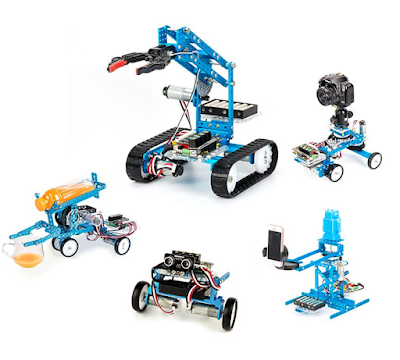
We have been enjoying playing with our new mBot Ultimate robot from Makeblock. I was fortunate to be asked to review this product, and the kids and adults in our house have had fun building and experimenting with our first build, the "Robotic Arm Tank" robot. 
 
Makeblock creates products for STEAM education that help people turn their "ideas into reality". The mBot Ultimate 10-in-1 coding robot kit will certainly inspire teens and families who love to build and engineer to explore robotics and coding in depth. Read on to find out what we liked best about this robot building kit.
 
STEM Makeblock Ultimate Coding Robot Kit
 
Please note: I was given this product free of charge and invited to honestly review this product and become an affiliate of Makeblock. I was not otherwise compensated to write this post. This post contains affiliate links, meaning I receive a commission from purchases made through these links, at no additional cost to you. Please see disclosures for more information.


Unboxing mBot Ultimate 10-in-1 Coding Robot

The mBot Ultimate comes with a ton of pieces and components to build 10 robots with different features. It's essentially a modern erector set with metal support pieces, motors, sensors and a circuit board. 
 
STEM Makeblock Ultimate 10-in-1 Coding Robot Kit


The box consists of 2 layers of pieces. The instruction booklet has a detailed listing of parts with illustrations. After building our first robot, I would highly recommend familiarizing yourself with all the parts prior to building. Some of the hardware is very well organized and labeled, while other parts are not. If I was going to use this in a classroom, after-school team or club setting I would be sure to either label the hardware in advance or dedicate time to allow students to identify which piece is which. 

STEM Makeblock Ultimate 10-in-1 Coding Robot Kit
 
The instruction manual has the directions for the Robotic Arm Tank, which is what we built, the Beverage Robot, and the Camera Dolly.  You can follow a link in the manual to directions for the other builds, however if you speak and read English you will have to translate the page to English with your web browser. In order to download further instructions you must create a free account on the site. After quite a bit of digging, we found easier access to the additional builds. You can find the instructions for the additional robots here in .pdf form. 
 
You can also find additional help and resources for the Ultimate 10-in-1 Coding Robot here.  

STEM Makeblock Ultimate 10-in-1 Coding Robot Kit


Building the mBot Ultimate Robot

This was not a quick build, but it resulted in a sturdy robot that my kids want to keep playing around with. I would highly recommend this kit for the teen who has a vested interest in engineering and robotics. Like any building project there is some trial and error especially when building with so many small parts. Patience and the willingness to make adjustments as you go is key! The mBot Ultimate would be perfect for an older child who has experience creating with LEGO, or building with tools. However, it would also be a great project for any age with help from an adult. 

Even my preschool and elementary school aged children enjoyed tinkering around with the pieces and built their own creations as we went. 
 
There are no special tools needed to assemble the robot. The one screwdriver needed is included in the kit. 

STEM Makeblock Ultimate 10-in-1 Coding Robot Kit

STEM Makeblock Ultimate 10-in-1 Coding Robot Kit


Coding and Playing with Makeblock's mBot Ultimate Robot

Once the robot was built, it was not difficult to get it up and running. There are many options for coding the mBot Ultimate robot. Beginners can use the mBlock app for simple block coding. For more advanced coding it is compatible with Arduino or Python coding combined with Raspberry Pi. 

We used an iPad to remote control our robot with the app available from Makeblock. Here is a peek into what the app looks like as you are using it to control the robot, and while you are coding. 

https://www.makeblock.com/?ref=UJWJzPw-bQClUh&utm_medium=5544&utm_source=influencer 
And here is our robot in action, helping us tidy up! 


Makeblock mBot Ultimate 10-in-1 Robot: Summary

Overall, we really enjoyed the process of building, coding and interacting with our Makeblock mBot Ultimate robot kit. I would recommend it based on the quality of the parts, the versatility of the components and the ability to build 10 different projects with one kit. I liked that the compatibility of the robotic components with various coding apps and languages, such as Arduino, Python and components compatible with Raspberry Pi, gives basic coding options for beginners, and gives experts the opportunity to try something new. 
 
The robot kit is STEM through and through with a good combination of each STEM discipline: technology through coding, science and technology through the use of sensors, math in the measurements and sizes of components, the engineering process through building, testing, trial and error.
makeblock STEM robotics


The kit comes at a higher price point, but for the right kid or family the mBot Ultimate would be a great investment as there is a lot of play and learning value here. There are also many other robots and products available from Makeblock in a range of prices that would meet the need of different budgets, ages and learning goals. 

Use code: SAVE10 for $10 off your first purchase!

Teachers can join Makeblock's discount program and purchase kits for their classroom. Learn more here.


Would we recommend Makeblock's mBot Ultimate 10-in-1 Robot Kit? Definitely. We are already thinking of what we might be able to do with our next mBot Ultimate build. Check out Makeblock! I think you and your favorite little (or big!) engineer will be glad that you did.

40+ STEM Activities Using Materials You Already Have

I've scoured the 300+ posts on Share it! Science to find over 40 hands-on science, STEM or STEAM activities that do not require special materials and can be completed with things you most likely already have at home. In a few cases I have made suggestions of possible substitutions for materials as well. With a little flexibility and creativity we can work together to give your family a fun experience at home (as well as sneaking in some learning...but don't tell the kids!)

Whether you are stuck close to home due to school closures, or just stumped on what to do with your kids over a vacation you are sure to find something here that will keep you busy! So, raid the recycling bin, check out the craft drawer and start learning and having fun.


This post may contain affiliate links, meaning I receive a small commission from purchases made from these links at no additional cost to you. Please see disclosures for more information. 


Making, Building and Experimenting Activities 


Kids love things that move! You can build a zany Rube Goldberg machine out of recyclables or just about anything else you have in the house. What task will your machine accomplish? Feeding the dog? Cooling you off on a hot day? Squeezing toothpaste out of a tube? The possibilities are endless with this one!

Encourage the kids to be spies and CSI's with this (ink-free) fingerprinting and (heat-free) invisible ink activity! Explore loops, whorls and arches and other unique patterns in your fingerprints and create and distribute some secret messages. You probably have everything you need right in the kitchen!

https://www.shareitscience.com/2015/03/saturday-science-experiment-spies-and.html

Have a flashlight, white paper, water, an old cd? Just a few of the things you can use to make a real rainbow indoors! Learn how to make 5 different rainbows from just a few common household items.

Save your toilet paper rolls and try this challengeHow much weight can a toilet paper tube hold? How about an egg?

Science in the kitchen! This outlines a decomposition experiment with apples, but you could substitute any food you've got on hand. 

Build a marble roller coaster! This is so much fun for kids and adults alike. You might not have the tubes I've used in this post on hand, but you can use just about any recycled container to create a little roller coaster.

Green Kid Crafts Delivered Right to your Door

This leaf pigment experiment can be pretty magical, and it can be done with markers if you don't have access to fresh leaves- you'll find the directions for the marker experiment at the bottom of this post.

Do you have flowers outside? Learn how to build a butterfly feeder and see who comes to visit! If you don't have the exact type of jar or sponge at home, experiment to see how you can create a feeder that will deliver a slow feed of nectar!

Love bird watching? Here are some ideas for easy-to-make bird feeders.

https://www.shareitscience.com/2016/07/solar-oven-STEM-engineering-design-challenge.html


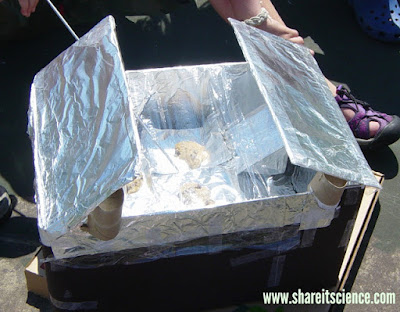
Challenge the kids to build a solar oven and make some nachos or s'mores! This is wonderful for open-ended design and engineering.

Investigate reflections with mirrors and drawings. You can also challenge the kids to code some secret messages that only a mirror will help them read!

Did you know that your kids can participate in professional science projects in a hands-on way, or online? Here are some starting points for getting kids involved in citizen science projects.

Do your kids know where the trash goes? Build a landfill model and learn what happens in it over time. Great conversation starter for Earth Day!

ARRRGH! Do your kiddos love pirates? Try these pirate optical illusion activities.


Nature, Wildlife and Outdoor Activities


Go on an indoor animal adaptations scavenger hunt! Free printable included at the end of the post.

Go on a math-themed scavenger hunt for the Golden ratio in the flower garden or the park.

https://www.shareitscience.com/2015/06/childrens-steam-festival-golden-ratio.html

Did you know you can grow a houseplant from kitchen scraps? Try growing a grapefruit plant or an avocado plant

Learn the parts of a flower through dissection! Ideas included for adapting for all age levels.

Got dirt, mud, sand or snow? Learn some animal tracks and go on a scavenger hunt.

Dream up and design a themed garden! Fun themes for kids are: taco or pizza garden, rainbow garden, and alphabet garden.

Build your own indoor worm composting bin and start composting your food scraps.

Challenge the kids to design and engineer a plant seed from craft materials and see how well it sinks, flies or floats!

https://www.shareitscience.com/2016/03/seed-design-engineering-challenge.html


Build a creature and learn about animal adaptations with this easy activity.

Did you know bees communicate through dance? Challenge the kids to code directions in a dance just like a bee!

Kids love building? Here are some nature sculpture engineering challenges. Get outside and build!

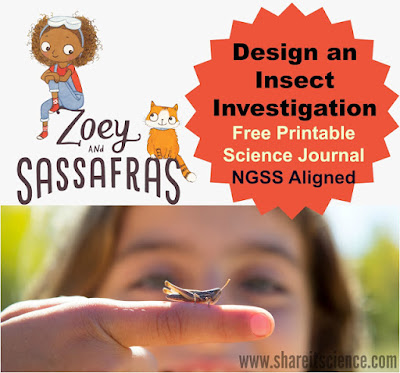
For bug-loving kids, here are ideas for designing an insect investigation, includes a free printable science journal.

https://www.shareitscience.com/2017/03/design-insect-investigation-with-Zoey-Sassafras-NGSS-science-activity-zoey.html


Observe birds at the feeder and keep a tally with this free bird counting printable.

Go on a nature walk and hunt for cool lichen, see what types of fungus you can find, or find an empty bird's nest.


STEAM: Activities that include Art


You'll find several STEAM activities in this post outlining a family STEAM (Science, Technology, Engineering, Art and Math) event at my school. These are all fun for the whole family.

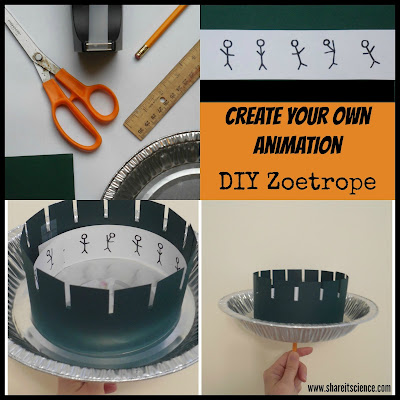
Grab a container from the recycling bin and build a zoetrope, then have the kids make some simple animation. This is always a hit with older kids. **Depending on the size of your container you may need to adapt the measurements. (We have faith in you!)

https://www.shareitscience.com/2017/01/diy-zoetrope-animation-steam-project.html


Hone the kid's observation skills and practice sketching in this "magnify without a magnifier" art project. All you need is a writing implement, an interesting object to draw and some paper. 

Find some fractal patterns outdoors or online and create a beautiful fractal sun catcher. If you don't have tracing paper try substituting with parchment paper or very carefully with tissue paper.

https://www.shareitscience.com/2017/02/fractals-nature-suncatcher-STEAM-project.html


Activities that Make Use of Technology


Kids on the computer? They can be citizen scientists and participate in projects like Penguin Watch!

https://www.shareitscience.com/2014/10/penguinwatch-and-other-ways-you-can-be.html


Wildlife cameras are a great way to experience animals that you might not otherwise have the opportunity to see. Learn more about the Decorah Eagle wildlife cam here.

These are some videos I have used to teach science. They are all entertaining enough to watch for fun (and learn something too!)

Who doesn't like some fun music? Here are some of my favorite kid's science songs.


https://www.shareitscience.com/2016/01/storytime-from-space-kids-program.html


Did you know you can listen to an astronaut read you a picture book? Check out Story Time from Space.

Kids can learn coding for free through a variety of programs online (and off-screen as well!).


Looking for more science activities with household items?

Here is a list of companies offering free subscriptions during school closings!

Confidently Include More STEM in Your Homeschool

You know what I enjoy almost as much as teaching kids science? Teaching and empowering others to teach kids science! The STEM disciplines are important and relevant. Unfortunately, a lot of people do not believe they have the skills to teach science, technology, engineering or math. I don't believe this is true. I think there is something for everyone in the STEM disciplines and even if you weren't the strongest student in one of these subjects that does not mean you cannot inspire kids to love and excel.

If you are someone who would love to become more confident as a STEM teacher, especially if you are a homeschooler, I have an exciting resource and opportunity for you! The 2019 Homeschool STEM Conference - Online is coming up in March. I'm thrilled to be speaking in three of the 30+ sessions participants will have lifetime access to. In this blog post I'll give you the scoop on what I'll be talking about as well as other details about this extremely affordable resource for homeschoolers and others who want to improve their STEM teaching skills.

Homeschool STEM Conference Online

This post includes affiliate links meaning that I receive a small commission from purchases made through these links at no additional cost to you. Please see disclosures for more information.

STEM Resources

During the conference I'll be giving three talks. Below are the descriptions of each as well as some specifics about what you'll come away with. You'll also find more information and how to register here.

Best Resources for Developing Your Own Science Curriculum


Session description:
Interested in developing your own science curriculum but are unsure where to start? Maybe you are worried about your own science knowledge. Let’s explore some tried and true resources for confidently creating a custom curriculum. Tips on determining which concepts are skill-level appropriate for your learners, how to develop a unit and choosing resources to make your lesson planning stress-free regardless of your own science background! Will include tons of examples and resources.

Takeaways:
Over 20 resources for developing science curriculum, tips and activities, encouragement and a 2-page handout.


Using Picture Books to Teach Elementary STEM


Session description:
STEM does not have to be limited to equations, experiments and gadgets. Engage your children in STEM after a trip to the local library! A step-by-step guide on developing a lesson based on a favorite picture book. We’ll outline the benefits of integrating literacy and STEM as well as share lesson ideas to accompany several recently published award-winning children’s books. Tons of resources for building your library of children’s books and repertoire of STEM lessons.

Takeaways:
Over 35 STEM activity ideas, book list, 20 resources for finding STEM lessons that integrate children's books, and a handout.  

STEM picture books and activities


Engaging Hands and Minds with the 5E Inquiry Model


Session description:
The best (and possibly the most fun) way to learn science is through inquiry. The 5E Inquiry Model is a method of teaching science that allows learning to be driven by a child’s own wonder, curiosity and interest. Learn the 5 parts of the inquiry model along with many examples and prompts to help you develop your own science inquiry lessons. Will also include great resources that provide easy-to-follow inquiry activities and lessons to try in your homeschooling practice.

Takeaways:
Lesson ideas and planning template handout, over 15 resources, ready-to-use ideas.  


Homeschool STEM Conference Sessions

Here are just a few more titles of the 30+ sessions that you'll have lifetime access to.

  • STEAMSDay: How to Devote a Day a Week to Hands-On, Real-Life Learning
  • STEM for Everyone
  • What is STEM & Why is it Important?
  • How to be a Marine Biologist
  • Scratch for Elementary and Middle Schoolers
  • A Hands on Method for Learning Math Facts
  • Hands-on examples of Simple Machines
  • High School Chemistry Can Be Fun
  • Block-Based Programming Basics, Resources, and Insider Secrets
  • STEM Success for Poets & Other Non-Science People
  • Integrating Art into Math & Science
...and many, many more!


Register for the Homeschool STEM Conference

You can learn more and register for the STEM conference through this link. I hope that you can join us! It's going to be great!

Have more questions? Feel free to e-mail me: shareitscience@gmail.com, or connect through social media:

Facebook 
Twitter


 https://tinyurl.com/y477krxw


46 Amazing STEAM Resources!

PLEASE NOTE: Unfortunately, the sale described below is over, but you'll find lots of great STEAM resources at the STEAM Kids website

I'm so excited to be sharing a bundle of resources that will be invaluable for any one who teaches, runs an after-school program, designs camp programming, provides child care, has children at home, homeschools....just about anyone who works with elementary aged kids and cares about STEAM education.

This bundle of 46 digital STEAM resources is from a great group of education writers including the STEAM Kids crew, which you know I'm a big fan of. Others include: Left Brain Craft Brain, STEAM Powered Family, Babble Dabble Do, The STEM Laboratory, Kids STEAM Lab, Vivify STEM, A Dab of Glue Will Do and many more! 

STEAM Back to School Resources
This post contains affiliate links, meaning I make a small commission if you make a purchase (at no additional cost to you). Please see disclosures for more information.


Amazing STEAM Resources! 


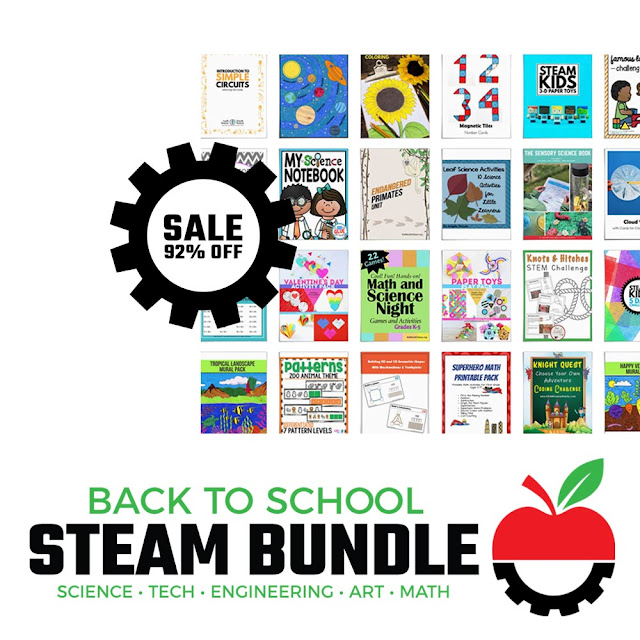
The Back To School STEAM Bundle, is a huge (and I mean HUGE, like over 1,700 pages huge) collection of science, technology, engineering, art and math activities, lessons and challenges being sold at 92% off for a limited time.

There are so many fabulous resources here (I'll list them below) it is a little mind-blowing. From Wednesday 8/15/2018 - Monday 8/20/2018 you can grab what would normally cost you $268 for only $19.99. Normally, I wouldn't write a post pitching a product like this, but this is an offer I can't imagine passing up knowing the quality of the materials this crew of authors brings to the table.


STEM, STEAM, Science Activities and More! 


Here is what is included, you will quickly see why I am so excited about this!!


Integrated STEM & STEAM

10 products ~ 315 pages ~ $67 value

5 Day Space Mission
Paper Play Pack
Holiday Card Pack
Valentine Paper Play Pack
Cool Math & Science Night STEM Games and Activities
151 STEAM Challenges
STEAM Kids 5 Day Challenge
Four Seasons Activity Pack
Botany STEM Challenge
STEAM Activity Pack
Bubbles STEM Pack
Density STEM Pack


Science

9 products ~ 376 pages ~ $56 value

The Sensory Science eBook
Montessori Science Bundle
Endangered Species Unit: Primate Lesson Plan
Bird Pairs: Printable Matching Game
Cloud Wheel + Cloud Identification Guide
Apple Science Experiments
Leaf Science Activities
Shark Unit Study
My Science Notebook


Technology

4 products ~ 82 pages ~ $22 value

Knight Quest Coding Game
Magic Reveal Binary Code Game
Circuit Cards Creative Activities for Kids
Introduction to Simple Circuits


Engineering

5 products ~ 128 pages ~ $18 value

STEM Challenge: Build Famous Landmarks
3-D Paper Toys and Bots
Magnetic Tile Idea Cards
Knots & Hitches STEM Challenges
Mechanical Advantage STEM Challenges


Integrated Art

4 products ~ 94 pages ~ $27 value

Golden Rule Coloring eBook
Tropical Landscape Mural Pack
Happy Vegetable Mural Pack
Solar System Mural Pack


Math

11 products ~ 698 pages ~ $63 value

Number Decomposition
Marshmallows and Toothpicks 2-D and 3-D Geometry Cards
Fraction Decimals Percentage Puzzles
Math Checkers Bundle
Fidget Spinner Addition / Subtraction
Fidget Spinner Multiplication / Division
Superhero Math
Pattern Block Logic Puzzles for Kids
3-D Shapes Slap It Card Game
Zoo Animal Patterns Pack
20 Math Games for K-2


TOTAL
46 Products ~ 1700+ pages ~ $268


AND...I didn't even mention the bonuses! You will also get 15 extra printable products and 8 coupons to use in some of your favorite STEAM educator stores.

Don't miss out on this one! More details and purchase information here. 

https://steamkidsbooks.com/back-to-school-steam-bundle/?ref=26&campaign=blogpost

More STEAM 


If you like STEAM activities you'll definitely want to check out some of the ones I've featured here on the blog, including:

10 Most Popular Science Activities of 2017

2017 has been another exciting year of growth on this little blog. I'm so thankful for my readers and your support! I wanted to share the 10 most popular science activities on the blog this year, as well as announce some exciting changes for Share it! Science in 2018.

I'll be taking a brief hiatus from writing any new blog posts as I work towards improving the Share it! Science site. In the new year the site will undergo a facelift, and get some behind-the-scenes updates that will improve the way readers navigate the site. You can also look forward to a regular newsletter that will be full of science, STEM and STEAM resources. There will continue to be content added to the site regularly, just as you've come to expect. I'm really excited about the changes and hope you stick around to see what is in store for us in 2018!

In case you missed these science, STEM and STEAM activities, here are the 10 most visited posts from the past year. Some are new, a few are oldies but goodies that continue to pique the interest of science teachers, homeschool families, and parents who love providing hands-on learning fun for their kids.


1. Year of the Solar Eclipse! 


This past summer, the United States went eclipse crazy! Due to that, I had my first viral post: Everything You Need to Know About the Great American Solar Eclipse

http://www.shareitscience.com/2017/05/the-great-american-solar-eclipse-safe-viewing-education-resources.html

It included resources for finding out where and when the eclipse could be viewed, as well as safe viewing practices. Although it is rare that so many are able to witness a solar eclipse across the U.S.A. we'll have another opportunity in 2024, so tuck this post away again until then!

If you are interested in astronomy or want to teach kids more about it, you'll also want to visit these posts:

2. DIY Zoetrope STEAM Project


Early in 2017 I wrote this post about making your own zoetrope to create animation as part of a "A-Z STEM" series. Z was for Zoetrope! It quickly became one of my most popular posts of all time and is still very popular on the blog. If you love hands-on projects for kids this is one that will keep them engaged for hours!

http://www.shareitscience.com/2017/01/diy-zoetrope-animation-steam-project.html

If this project looks intriguing you'll also want to explore:


3. DIY Recycled Seed Paper


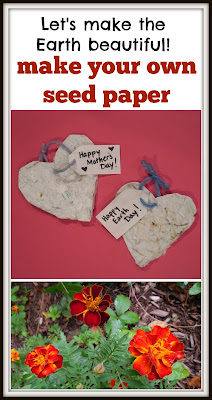
This older post has been a favorite on the blog for 2 years now. It is a tutorial for making your own recycled paper, infused with seeds. You can plant the paper right in the ground or a pot and grow flowers. It's not only a fun activity to help kids learn to recycle and about nature, but also makes a great homemade gift!

http://www.shareitscience.com/2015/04/make-earth-beautiful-with-homemade-seed.html

If you like DIY projects for the kids, or enjoy nature and gardening with children, you won't want to miss these activities:

4. Safe and Easy Projects for Little Spies and CSIs


Another oldie but goodie, the post "Spies and CSIs" has been a hit for a long time. It includes directions for 2 different invisible ink projects, that don't need candles or a heat source, and a version of fingerprinting that does not require ink. Great for a rainy afternoon, your students or children can create secret messages and a fingerprint database with materials you most likely have on hand already.

http://www.shareitscience.com/2015/03/saturday-science-experiment-spies-and.html

If your students or children love hands-on science activities like Spies and CSIs with materials that are easy to find, then you should definitely check out these posts:


5. Learn to Conserve: Build a Landfill Model 


I designed this conservation lesson around a children's book for a Storybook Science series earlier in the year. In "Here Comes the Garbage Barge" Inspired Landfill Model you can learn where all of the trash we generate goes and how a landfill works by building a model. I used this lesson many times when teaching 3rd grade science and it was always a fun eye-opener for my students.

http://www.shareitscience.com/2017/03/storybook-science-garbage-barge-landfill-model.html

If you teach conservation at home or school, you'll want to learn more about these green resources:

6. DIY Pinhole Projector to Safely View the Solar Eclipse


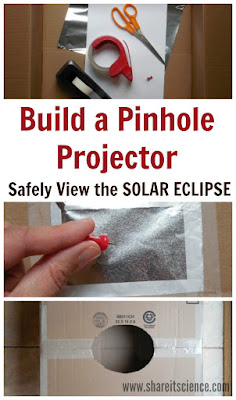
This DIY for building a pinhole projector to view the solar eclipse was very popular this summer as well. This is a great project for kids who like to build things. It requires simple materials and is a great lesson in optics as well as functioning as a tool for eclipse viewing.

http://www.shareitscience.com/2017/06/pinhole-projector-solar-eclipse-STEM.html

To learn more about solar eclipses, or cool DIY projects, check out these links that I've also shared above:

7. Teaching Kids to Code 


Teaching kids how to code can help them develop important problem-solving and sequencing skills. This post on different ways to teach kids coding with and without a computer continues to be a popular one. It is a lot easier than you might think to teach these skills and it doesn't necessarily mean more screen time for kids.

http://www.shareitscience.com/2015/12/teaching-kids-of-all-ages-how-to-code.html

If you are a STEM teacher, or any teacher or homeschool family for that matter, and are interested in educational technology, you will also find "Eduporium: A Great Resource for Educational Technology" useful.


8. Best Lesson for Teaching Water Conservation 


This water conservation demo was always an eye-opening and effective lesson when I was teaching science. It clearly and easily illustrates how little fresh, clean water is available to drink, and why we must conserve water. The bonus is that it uses materials you most likely already have in your kitchen.

http://www.shareitscience.com/2015/10/water-conservation-science-demonstration.html

If you are looking for more resources for teaching conservation or teaching science and STEM in general, you'll want to investigate the following.

9. Plan a Family STEAM Night at School or Home


STEAM, or the inclusion of art with the STEM disciplines of Science, Technology, Engineering and Math is a huge movement in developing curriculum that stimulates all parts of the brain and engages creative problem-solving and design skills. This popular post outlines a Family STEAM Night event I helped to organize at my school. These fun, family STEAM activities can easily be used at home or school.

http://www.shareitscience.com/2015/06/childrens-steam-festival-family-steam.html

If you want to learn more about STEM and STEAM you won't want to miss the following:

10. Cool Engineering Projects for Kids


Check out Tinker Crate with us in this post where we use a STEM kit to build our own automaton! A great way to engage kids in tinkering, building and engineering!

http://www.shareitscience.com/2017/05/engineering-DIY-automaton-STEM-project-tinker-crate.html

Want to get kids engineering, designing and building? Check out these posts: