Share it! Science : Search results for golden ratio
Showing posts sorted by date for query golden ratio. Sort by relevance Show all posts

40+ STEM Activities Using Materials You Already Have

I've scoured the 300+ posts on Share it! Science to find over 40 hands-on science, STEM or STEAM activities that do not require special materials and can be completed with things you most likely already have at home. In a few cases I have made suggestions of possible substitutions for materials as well. With a little flexibility and creativity we can work together to give your family a fun experience at home (as well as sneaking in some learning...but don't tell the kids!)

Whether you are stuck close to home due to school closures, or just stumped on what to do with your kids over a vacation you are sure to find something here that will keep you busy! So, raid the recycling bin, check out the craft drawer and start learning and having fun.


This post may contain affiliate links, meaning I receive a small commission from purchases made from these links at no additional cost to you. Please see disclosures for more information. 


Making, Building and Experimenting Activities 


Kids love things that move! You can build a zany Rube Goldberg machine out of recyclables or just about anything else you have in the house. What task will your machine accomplish? Feeding the dog? Cooling you off on a hot day? Squeezing toothpaste out of a tube? The possibilities are endless with this one!

Encourage the kids to be spies and CSI's with this (ink-free) fingerprinting and (heat-free) invisible ink activity! Explore loops, whorls and arches and other unique patterns in your fingerprints and create and distribute some secret messages. You probably have everything you need right in the kitchen!

https://www.shareitscience.com/2015/03/saturday-science-experiment-spies-and.html

Have a flashlight, white paper, water, an old cd? Just a few of the things you can use to make a real rainbow indoors! Learn how to make 5 different rainbows from just a few common household items.

Save your toilet paper rolls and try this challenge!  How much weight can a toilet paper tube hold? How about an egg?

Science in the kitchen! This outlines a decomposition experiment with apples, but you could substitute any food you've got on hand. 

Build a marble roller coaster! This is so much fun for kids and adults alike. You might not have the tubes I've used in this post on hand, but you can use just about any recycled container to create a little roller coaster.

Green Kid Crafts Delivered Right to your Door

This leaf pigment experiment can be pretty magical, and it can be done with markers if you don't have access to fresh leaves- you'll find the directions for the marker experiment at the bottom of this post.

Do you have flowers outside? Learn how to build a butterfly feeder and see who comes to visit! If you don't have the exact type of jar or sponge at home, experiment to see how you can create a feeder that will deliver a slow feed of nectar!

Love bird watching? Here are some ideas for easy-to-make bird feeders.
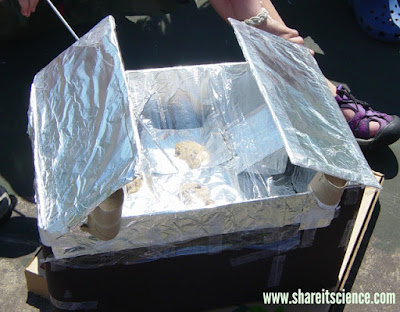
https://www.shareitscience.com/2016/07/solar-oven-STEM-engineering-design-challenge.html


Challenge the kids to build a solar oven and make some nachos or s'mores! This is wonderful for open-ended design and engineering.

Investigate reflections with mirrors and drawings. You can also challenge the kids to code some secret messages that only a mirror will help them read!

Did you know that your kids can participate in professional science projects in a hands-on way, or online? Here are some starting points for getting kids involved in citizen science projects.

Do your kids know where the trash goes? Build a landfill model and learn what happens in it over time. Great conversation starter for Earth Day!

ARRRGH! Do your kiddos love pirates? Try these pirate optical illusion activities.


Nature, Wildlife and Outdoor Activities


Go on an indoor animal adaptations scavenger hunt! Free printable included at the end of the post.

Go on a math-themed scavenger hunt for the Golden ratio in the flower garden or the park.

https://www.shareitscience.com/2015/06/childrens-steam-festival-golden-ratio.html

Did you know you can grow a houseplant from kitchen scraps? Try growing a grapefruit plant or an avocado plant! 

Learn the parts of a flower through dissection! Ideas included for adapting for all age levels.

Got dirt, mud, sand or snow? Learn some animal tracks and go on a scavenger hunt.

Dream up and design a themed garden! Fun themes for kids are: taco or pizza garden, rainbow garden, and alphabet garden.

Build your own indoor worm composting bin and start composting your food scraps.

Challenge the kids to design and engineer a plant seed from craft materials and see how well it sinks, flies or floats!

https://www.shareitscience.com/2016/03/seed-design-engineering-challenge.html


Build a creature and learn about animal adaptations with this easy activity.

Did you know bees communicate through dance? Challenge the kids to code directions in a dance just like a bee!

Kids love building? Here are some nature sculpture engineering challenges. Get outside and build!

For bug-loving kids, here are ideas for designing an insect investigation, includes a free printable science journal.
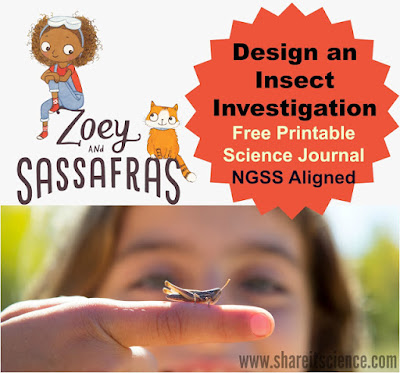
https://www.shareitscience.com/2017/03/design-insect-investigation-with-Zoey-Sassafras-NGSS-science-activity-zoey.html


Observe birds at the feeder and keep a tally with this free bird counting printable.

Go on a nature walk and hunt for cool lichen, see what types of fungus you can find, or find an empty bird's nest.


STEAM: Activities that include Art


You'll find several STEAM activities in this post outlining a family STEAM (Science, Technology, Engineering, Art and Math) event at my school. These are all fun for the whole family.

Grab a container from the recycling bin and build a zoetrope, then have the kids make some simple animation. This is always a hit with older kids. **Depending on the size of your container you may need to adapt the measurements. (We have faith in you!)

https://www.shareitscience.com/2017/01/diy-zoetrope-animation-steam-project.html


Hone the kid's observation skills and practice sketching in this "magnify without a magnifier" art project. All you need is a writing implement, an interesting object to draw and some paper. 

Find some fractal patterns outdoors or online and create a beautiful fractal sun catcher. If you don't have tracing paper try substituting with parchment paper or very carefully with tissue paper.

https://www.shareitscience.com/2017/02/fractals-nature-suncatcher-STEAM-project.html


Activities that Make Use of Technology


Kids on the computer? They can be citizen scientists and participate in projects like Penguin Watch!

https://www.shareitscience.com/2014/10/penguinwatch-and-other-ways-you-can-be.html


Wildlife cameras are a great way to experience animals that you might not otherwise have the opportunity to see. Learn more about the Decorah Eagle wildlife cam here.

These are some videos I have used to teach science. They are all entertaining enough to watch for fun (and learn something too!)

Who doesn't like some fun music? Here are some of my favorite kid's science songs.


https://www.shareitscience.com/2016/01/storytime-from-space-kids-program.html


Did you know you can listen to an astronaut read you a picture book? Check out Story Time from Space.

Kids can learn coding for free through a variety of programs online (and off-screen as well!).


Looking for more science activities with household items?

Here is a list of companies offering free subscriptions during school closings!

Fractals in Nature: A Mathematical Suncatcher Project

In this STEAM activity we will combine art, nature, science, and math. Learn all about fractals and how to find their intricate repeating patterns in nature. Kids and students will create a beautiful suncatcher featuring fractal patterns for the classroom or window at home. 

While you can create these suncatchers any time of year, this can be a wonderful indoor activity in the winter. All you need is a window to sit by and a view of some deciduous trees! You will love this STEAM project as it leads to all sorts of curiosities and wonder about patterns in nature.


This post contains affiliate links, meaning I receive a small commission from purchases made through these links at no additional cost to you. Please see disclosures for more information.

What is a fractal? 


Let's combine science, math and art with a nature inspired STEAM project. Fractals are fascinating mathematical patterns that are never-ending. They repeat and are similar regardless of scale. In other words, a small part of the whole looks just like the whole. These patterns create beautiful images that can be constructed by humans, but are also prevalent in nature.

One common example of a fractal is the Sierpinski triangle, where the triangle shape repeats and is the same whether you are looking at just one of the smaller triangles, or the large triangle.
Sierpinski Triangle (image: public domain)


Fractal patterns are found throughout the natural world. From fern fronds and planetary rings, to lightning and tree branches, nature is full of these beautiful patterns. Here are some examples:

Frost fractals

Romanesco Brocolli Fractals (image by Jon Sullivan, public domain)

Create a Fractal Suncatcher


You can go out and find fractals too! We went on a fractal scavenger hunt and then made a pretty suncatcher with one of the patterns we found.

To do this project you'll need:


First, head outside to see what sort of fractal patterns you can find! Remember, they are the same at all scales, so you could find large or small examples. With the leaves gone from the trees it is easy to see the branching patterns:

Fractals in the branching of a tree.

Snap some photos of the fractal patterns you find.

Fractals in the branching pattern of flowers.

Once you're back indoors, you'll print out your favorite images and trace the patterns in any color or repeating scheme that you like onto your tracing paper.


If you are unable to go outside due to the weather, you can also print out fractal images from the internet. Check out these amazing examples of fractals in nature. 


Once you are happy with your fractal design, create a frame with the dark card stock to complete your suncatcher. Hang it on the window to enjoy.


We were amazed at how much our suncatcher, which was a repeated pattern from one tree, looked like branching blood vessels in the human body. It is amazing that similar patterns are found in so many naturally occurring places.

More Fun Learning with Fractals


If you are interested in learning more about fractals, we highly recommend Mysterious Patterns: Finding Fractals in Nature by Sarah C. Campbell, and incredible images by her husband, Richard P. Campbell. I was lucky enough to hear Sarah speak about her book, and she is one of the most enthusiastic people I've ever heard talk about patterns in nature.


**Purchasing books from Bookshop is a great way to support this blog AND your local book sellers!** 

You might also be interested in another book by the Campbells, Growing Patterns: Fibonacci Numbers in Nature.


If you're looking for more great STEAM (Science, Technology, Engineering, Art and Math) activities, you won't want to miss the STEAM Kids e-book. Get it here, or read our review here.

http://steamkidsbooks.com/product/steam-kids-ebook/?ref=26&campaign=fractals

More Math and Nature


The Golden Ratio in the Garden which is part of our Children's STEAM Festival series.

http://www.shareitscience.com/2015/06/childrens-steam-festival-golden-ratio.html


Lessons from Sunflowers 

http://www.shareitscience.com/2015/09/glimpse-of-garden-week-24-lessons-from.html

This post is part of the 28 Days of STEAM series on the Left Brain, Craft Brain blog. Check it out for tons of fun STEAM activities!

http://leftbraincraftbrain.com/2017/01/31/28-days-of-steam-projects-for-kids/


25 Weeks in the Garden, An Autumn Round-up

We've had a couple of hard frosts, so there is no question that the growing season is finished! It's always a bittersweet time for me, as I pull up the plants in our garden to clear it out for the winter. It gives me a chance to reflect on what worked and what didn't and look forward to trying again next year!

I always learn so much from the garden each year. New plants, new insects, new success and failures. Let's take a look back at 25 weeks in the garden and start dreaming about what we might plant next spring!

April 1st, 2015: No Foolin' 
April 10th, 2015: Week 2 (The first sprouts)
April 15th, 2015: Crocus and Strawberries

Crocus ©SBF
April 24th, 2015: A Splash of Yellow
April 30th, 2015: Perennials Popping Up
May 6th, 2015: April Showers Bringing May Flowers

http://www.shareitscience.com/2015/05/glimpse-of-garden-week-6-april-showers.html

http://www.shareitscience.com/2015/05/glimpse-of-garden-week-7-seed-potatoes.html May 13th, 2015: Seed Potatoes
May 21st, 2015: Onion Sets

May 29th, 2015: Preparation and Procrastination
June 3rd, 2015: The First Pest Problems

http://www.shareitscience.com/2015/06/glimpse-of-garden-week-10-first-pest.html

June 10th, 2015: Tortoise Beetles!
June 18th, 2015: Pollinators and Wild Strawberries
June 26th, 2015: The Golden Ratio in the Garden

http://www.shareitscience.com/2015/06/childrens-steam-festival-golden-ratio.html

July 3rd, 2015: Green Galore!
July 10th, 2015: Much Ado About Mulch
July 18th, 2015: Tendrils-Plants in Motion


http://www.shareitscience.com/2015/08/glimpse-of-garden-week-20-insect-mystery.htmlJuly 24th, 2015: Isn't Summer Delicious?
July 31st, 2015: Lovely Lilies and Gorgeous Gourds
August 7th, 2015: Tomato Blossom End Rot...and Other Adventures
August 14th, 2015: An Insect Mystery
August 20th, 2015: Insect Mystery Revealed!


August 27th, 2015: Lemon Cucumbers
September 3rd, 2015: Small Potatoes

http://www.shareitscience.com/2015/08/glimpse-of-garden-week-22-lemon.html


September 9th, 2015: Lessons from Sunflowers 
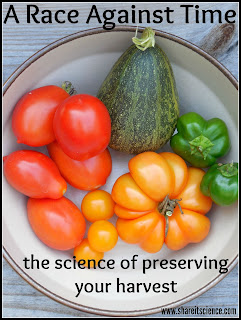
September 18th, 2015: A Race Against Time- The Science of Preserving Your Harvest

http://www.shareitscience.com/2015/09/glimpse-of-garden-week-24-lessons-from.html 
 http://www.shareitscience.com/2015/09/glimpse-of-garden-week-25-race-against.html

What will you plant next year? Gardening with kids? Do you have a school garden? Share your ideas! Comment below or connect with us on Facebook or Google+

(affiliate link)
Homegrown Collective

Lessons from Sunflowers

Sunflowers are by far one of my favorite garden flowers. They are fairly easy to grow, are big and bright and live up to their sunny name. They attract bees and birds. Sunflowers are also a great plant to grow with children.

Not only are sunflowers a lovely addition to the garden, but they can also be the launching point for several different science and math lessons. From types of flower and flower parts to biological phenomena like tropism, and natural math like the Fibonacci sequence, a sunflower can teach you a lot, let's see what there is to learn!


This post contains affiliate links, meaning I will receive a small commission (at no additional cost to you) if you make a purchase after clicking a product link. Please see disclosures page for more details. 
 

Composite flowers

Small flowers of the inflorescence are beginning to open. ©SBF
Sunflowers are composite flowers. If you look carefully at the center of a sunflower you may have noticed that there are a bunch of tiny flowers there. This clump of tiny flowers is called an inflorescence, or a cluster of flowers that make up one larger flower.

Many composite flowers have 2 types of flower parts. There are the petals that form what looks like rays of sun on a sunflower, then the smaller flowers in the inflorescence. You are probably familiar with many other members of this group of flowers- Dandelions, Black-eyed Susans, Asters and Hawkweed. 

Phototropism

You can observe phototropism in sunflower plants. Phototropism is the concept of a plant growing towards light. There are many tropisms, or plant movements to external stimuli. You'll notice this with your houseplants that lean toward the window and in your garden they learn toward the sun. 

Can you tell which side of the garden is shaded by trees and which is open to the sun?

Leaning sunflowers! ©SBF 2015
From seed to adult plant the sunflower grows towards the light. Here is a time lapse video of this process:


If you are interested in the idea of plants in motion, you'll want to check out Roger Hangartner's videos at his website, Plants in Motion. They are fascinating! See some sunflowers in motion here.

I also explored this concept earlier in the summer with the tendrils of my cucumber vines.

http://www.shareitscience.com/2015/07/glimpse-of-garden-week-16-tendrils.html


Sunflower Math!

The spiraling shapes in the seeds of a sunflower follow the Fibonacci sequence.
Fibonacci in the center of a sunflower! ©SBF 2015

You can find the Fibonacci sequence, 1, 1, 2, 3, 5, 8, 13, where each new number is the sum of the previous 2, all over the garden and in nature. I explored this concept in greater depth earlier in the summer. Go on a math scavenger hunt in the garden by following this link. 

http://www.shareitscience.com/2015/06/childrens-steam-festival-golden-ratio.html

Besides teaching us lessons in science and math, sunflowers are a cheery addition to any garden space!


Children's STEAM Festival: A Golden Ratio Scavenger Hunt in the Garden

It is Day 5 of the Children's STEAM Festival and today we are wrapping things up by examining how MATH fits into STEAM. For those of you who have been enjoying my "Glimpse of the Garden" posts, this will serve as the post for Week 13. We'll investigate some math principles that express themselves in some of the flowers blooming in my yard this week! Once you have learned all about the Golden Ratio in the garden, head over to Growing with Science where Roberta is focusing on three books in the "You Do the Math" series: "Solve a Crime", "Fly a Jet Fighter" and "Launch a Rocket into Space".
 
This post contains affiliate links meaning I make a small commission from purchases made from these links at no additional cost to you. See disclosures for more information.

The Golden Ratio

What is the golden ratio? It has many names: golden ratio, golden section, golden mean, divine proportion, etc. It has been called many things by different groups of people as it has been discovered and rediscovered throughout our history. The golden ratio, or phi, can be found in nature and in human construction.

I think this concept is best understood visually, so this video will help those like me who need to see it to believe it! This is a clip from Donald in Mathmagic Land, an oldie but a goodie from Disney. This cartoon does a nice job of giving visuals for other math concepts as well as this one, so if you haven't seen it in its entirety, you might want to pick up a copy.


The Math: Golden Ratio and Fibonacci Sequence

So how do we find the golden ratio mathematically? Two numbers are in the golden ratio if: their ratio is the same as the ratio of the numbers added together to the larger of the two numbers, or put more clearly: a/b = (a+b)/a. For example if our numbers are a= 8, b= 5 then we have 8/5 = (8+5)/8, or 1.6 = 1.625. The larger the numbers, the more closely they equal 1.618.
By Ahecht (Original); Pbroks13 (Derivative work); Joo. (Editing) (Own work) [CC0], via Wikimedia Commons


Mathematicians generally use the number 1.618 to represent the golden ratio. Phi is similar to pi, 3.14, (the ratio of the circumference of a circle to its diameter) in the respect that the digits theoretically go on forever.

The Fibonacci sequence is a series of numbers that relate to the golden ratio in the respect that any two successive numbers' ratio is equal to the golden ratio. We see numbers in the Fibonacci sequence, and the Fibonacci spiral, or golden spiral all over nature.
"Fibonacci spiral 34" by User:Dicklyon - self-drawn in Inkscape. Licensed under Public Domain via Wikimedia Commons
Here is another video to help us visualize the golden ratio and the Fibonacci sequence and spiral in nature.


The pentagram and pentagon shapes also hold the golden ratio.
"Ptolemy Pentagon" by en:User:Dicklyon - Own work by en:User:Dicklyon. Licensed under Public Domain via Wikimedia Commons

"Pentagram-phi" by Jamiemichelle at English Wikipedia - Transferred from en.wikipedia to Commons.. Licensed under Public Domain via Wikimedia Commons

A Golden Ratio Scavenger Hunt in the Garden

You do not have to be able to do the math to find the Golden Ratio or Fibonacci spiral in nature! Take the kids outside for a pentagon and spiral search in the garden.
 
I've found it on this laurel. 
 
 ©SBF 2015
 
And here, not one, but 2 pentagons!
©SBF 2015
Now you try it!
©SBF 2015

©SBF 2015
©SBF 2015

©SBF 2015

 
These proportions can also be found in seashells, pine cones, stems of plants, trees, etc. Where else can you find them?

"Aeonium tabuliforme" by Max Ronnersjö - Own work. Licensed under CC BY-SA 3.0 via Wikimedia Commons


©SBF 2015

©SBF 2015
What other shapes can you find in nature? Triangles, hearts, circles? Next time you are out for a walk or hike play the shape scavenger hunt game. You'll be surprised at what you find! 

Thanks for exploring math in the garden with me today and for joining us for our Children's STEAM Festival! I'd love to hear how you use these ideas. Be sure to post a comment below! To review our schedule and find links to all of the festival posts, click the Children's STEAM Festival button below. 
http://www.shareitscience.com/2015/06/announcing-childrens-steam-festival.html