Share it! Science : flowers
Showing posts with label flowers. Show all posts

DIY Seed Germination Jar: A Must-Have for Your Plant Unit!

Seed germination is one of nature's little wonders. Giving your kids and students the opportunity to grow a plant of their own can be a magical experience. Unfortunately, we most often stick the seeds in some soil where we cannot see what happens as the seed becomes a tiny sprout. You can easily solve this problem by building a germination jar so that kids can see the entire process in action!

Building the germination jar is easy, and it is the perfect addition to your plant unit at school or in your home-school. This inquiry-based science activity is linked to K-2 Next Generation Science Standards and offers an extension idea to align with Common Core English and Language Arts standards as well. Paired with a wonderful children's book, you'll definitely want to add this to your spring to-do list for school or home!
Elementary School Seed Plant Science Experiment


This post contains affiliate links, meaning I will receive a small commission (at no additional cost to you) if you make a purchase after clicking a product link. Please see disclosures page for more details.
 

Growing "One Bean"


There are so many science lessons and life lessons learned when children grow something themselves. You can make this activity a part of a science unit on life cycles or just an introduction to gardening with children.

First, we read One Bean, a sweet picture book by Anne Rockwell. In this story a boy plants a bean seed and watches it grow. Although told in a narrative style, anyone could follow the process of growing a bean seed themselves along with the story.


The boy puts the bean in a damp paper towel to prepare it for planting. Once it is wrinkled, he plants it in some soil and waits for his seed to sprout. This is where most planting projects become mysterious! The beauty of your germination jar is that you'll be able to watch the process unfold.
Fava Bean Germination Science Experiment NGSS Aligned

Build a Germination Jar 


To build your seed viewer, or germination jar, you'll only need a few supplies:
Water beads are pretty amazing! You only need a few at a time, and you can dry them out and reuse them for other projects.(They would be great to study absorption as well, as they soak up that water and grow to be 100's of times their original size.)

There are many ways to germinate a seed by keeping it moist, including wrapping in a damp paper towel like in the bean story we read. However, I like that by using the water beads, you do not have to cover the top of the jar up with plastic wrap or something else to hold the moisture in. I have used that method many times to teach children about plants. It works, but it can also lead to mold growing because it sometimes stays too wet.
Build a Seed Germination Jar for Science Experiments

You will have to experiment with how many water beads and how much water to use. The jar we began with ended up being far too large, so eventually we moved our experiment to a smaller glass. Start by using just a few water beads- a tablespoon of them can go a long way. Pour a bit of water on and let them absorb it for a couple of hours before adding anything else.

You want your jar to be moist, but not too wet. You will need enough water beads to hold your seed in place, but not so many that there is no room to grow. This is the experiment within the experiment!


Watch a Seed Germinate


Before you start, soak your bean seed(s) in a glass of water over night. This really helps to get them off to a quick start. We chose fava beans because they are easy for small hands to hold and are large so you can really see what is going on with them.

Once you've soaked your seed and prepared your water beads, place the bean seed so that it is close to the side of the glass and easy to view. Be sure that there are water beads over the top of the seed so that it stays moist.

Watch a seed germinate, great activity for plant unit

Then, you wait! Until the seed begins to germinate, you might want to give the jar a little more water each day, carefully pouring it around the outside of the jar where the seeds are. Within a day or so, you should begin to see that first part of the sprout, the radicle, emerging from the seed.

Keep an eye on your jar. If your water beads seem to be shrinking, add just a bit more water. Once you have a green sprout, you can choose whether to leave the seed in the water beads, or plant it in some soil. If you plan on trying to keep your plant growing to maturity, I'd suggest planting it before too long.
Watch a seed germinate! Plant science experiment

If you are lucky enough to have garden space, then that is the obvious place to grow your beans, but for those with space at a premium, particularly schools, I would suggest investigating growing a pocket garden on a wall. Here is one example of a pocket planter.
 

Meet Common Core and Next Generation Science Standards


This seed investigation will work towards meeting these Next Generation Science Standards for K-2.
NGSS K-LS1-1
NGSS K-ESS3-1
NGSS 2-LS4-1

You can also work towards these K-2 Common Core English and Language Arts Standards by creating an observation journal that includes words as well as drawings.
CCSS.ELA-Literacy.W.K.3
CCSS.ELA-Literacy.W.1.3
CCSS.ELA-Literacy.W.2.3

More Plant Science Investigations! 


Learning with plants can continue throughout the spring and summer seasons. It is a great way to investigate biology concepts like pollination with elementary students.

One of my favorite experimental plant projects is growing an avocado plant from its pit.

Grow an Alphabet Themed Kids Garden

Try growing a themed garden with kids. Some theme ideas are: an alphabet garden, a rainbow garden, a taco garden, or a pizza garden, or a garden friends companion garden. 

Explore math and science with sunflowers, and learn the parts of the flower with students in preschool all the way through High School by doing a flower dissection. 

Storybook Science Series


This activity is part of the Storybook Science series. You can find more great book-linked science activities in this series on the Inspiration Laboratories blog.  

http://inspirationlaboratories.com/storybook-science-3/

You'll also want to visit my Storybook Science posts from past years:

Using Nature Arts and Crafts to Inspire STEAM Learning

Creating art from natural items is an excellent way for kids to hone their observation skills while developing creativity. I'm excited to be reviewing the Nature Arts and Crafts printable pack from author Penny Whitehouse of the Mother Natured blog. Not only is this a beautiful and clever resource for families, teachers and summer camps, but it also provides opportunities for STEAM learning and building science observation skills.

There are over 30 activities included that only require a printer, a place in nature and an excited kid! I predict it will provide hours of creative hands-on engagement for the kids in your life. Check out what we've done so far with our copy.

Nature Art and Crafts Printable STEAM Activities

This post contains affiliate links, please see disclosures for more information. 

What are Nature Arts and Crafts? 


The Nature Arts and Crafts printable pack is a 60 page digital book including over 30 activities to take out into nature and create art. The activities are open-ended, inspiring creativity in nature loving kids. Not only do they get to explore art while out in nature, but also hone some important science and math skills in the process.

Nature Art and Crafts Printable STEAM Activities

There are printables for all skill levels included in the pack, from learning patterns and developing fine motor skills for young children, to creating intricate nature mosaics and nature journals for older kids.

Nature Art and Crafts Printable STEAM Activities


STEAM Learning Opportunities


Not only will kids get to be artistic and explore nature with these activities, but they also learn a lot in the process. Elements of STEAM (Science, Technology, Engineering, Art, Math) are inherent throughout. Concepts like symmetry, and patterning develop math skills. Activities like basket weaving inspire nature engineering projects.

Nature Art and Crafts Printable STEAM Activities

As kids choose the natural items they will use to make art, they make careful observations, looking for specific shapes and colors in nature. This can even lead to better plant identification skills. Using the printables during different seasons of the year can help children understand the changes that nature goes through.

Nature Art and Crafts Printable STEAM Activities

Fun with Nature Arts and Crafts


So far we've enjoyed a few of the activities and are excited to try them all. The best part is that you can do them over and over again and each time they come out differently! It only reminded me that I need to get a little laminator like this for home so that I can make sturdy copies of each that we can take with us whenever we go on an outdoor adventure.

Our cherry tree was just losing its blossoms when we were collecting materials, so we had plenty of pink petals to craft with! Here are some of our other "supplies".

Nature Art and Crafts Printable STEAM Activities

Pattern practice, first an AB pattern, then ABC!

Nature Art and Crafts Printable STEAM Activities

We also had fun with dress-ups!

Nature Art and Crafts Printable STEAM Activities

I love that there are so many different ways you can use the same printable to create something new! Here is another example:

Nature Art and Crafts Printable STEAM Activities

Where Can You Get Nature Arts and Crafts?


Ready to try these yourself? You can follow this link to learn more and to purchase the printable pack. This digital download is well worth the money, as you can print them over and over once you own it.

In the meantime, you can enjoy this free excerpt.

https://sowl.co/JU86V

Want to know more? Check out this video to see Nature Arts and Crafts in action!


Looking for more nature art? Check out these Nature Sculpture Engineering Challenges or this Beautiful Bird Nest craft. You might also enjoy this post on hosting a family STEAM night!

Nature Art and Crafts Printable STEAM Activities


Nature Art and Crafts Printable STEAM Activities

Disclaimer: I received a digital download of this printable pack in exchange for an honest review.

Grow an Alphabet Themed Kid's Garden!

A is for Aster and B is for Basil. Can you grow an alphabet in your garden? Here are some ideas for a themed children's garden for school or home.

Why not incorporate some literacy into your garden planning this year? Gardening already has so much potential for science and life lessons. This will be the third year we've shared an idea for a themed children's garden along with a seed giveaway. We're so excited to be able to do it again. No matter how you get gardening with kids, we believe it will be a rewarding experience.  

This post contains affiliate links, meaning I earn a small commission from purchases made from these links at no additional cost to you. Please see disclosures for more information.
 

Plan and grow an alphabet themed kid's garden! Literacy and science


Grow An Alphabet Themed Garden

For those of you with lots of space, you might be ambitious enough to try a garden with every letter of the alphabet. If you are starting seeds in the classroom, you could have each student take on a different letter. Or you could pick and choose from a few letters of the alphabet.


Here are some fruit/vegetable and flower ideas to get you started (please note: depending on where you live these may or may not be good choices for your garden, do your homework!):

A- Arugula, Aster
B- Beans, Bee Balm (Monarda)
C- Carrots, Cosmos
D- Dill, Daisy
E- Eggplant, Echinacea
F- Fennel, Forget-me-not
G- Gourds, Geranium 
H- Honeydew melon, Hollyhock
I- Iceberg lettuce, Impatiens 
J- Jerusalem artichoke, Johnny Jump Up
K- Kale
L- Lettuce, Lupine
M- Musk melon, Marigold
N- Napa cabbage, Nasturtium
O- Okra, Oenothera biennis (common evening primrose)
P- Peas, Petunias
Q- Quince, Queen Anne's Lace
R- Radish, Rose
S- Spinach, Sunflower
T- Tomato, Tulips
U- Upland Cress, Ursinia
V- Verbena, Viola
W- Watermelon, Wallflower
X- Xeranthemum
Y- Yarrow
Z- Zucchini, Zinnia (find out how to win some Zinnia seeds below!)


Grow a Kid's Name Garden

Spell out a name with garden plants. If I did mine I might plant Spinach, Artichokes, Radishes, Arugula, and Honeydew to spell out SARAH. You could certainly get creative and use the common names or specific variety names to spell out just about anything you wanted. Make some cute garden markers to go along with your name garden.

Looking for other themed garden ideas? Grow a butterfly or rainbow garden. Try growing a taco or pizza garden!

Seed Giveaway!

Now for some fun. We are very excited to have Renee's Garden provide us with seeds for our third annual garden seed giveaway. I love to use Renee's Garden seeds as they are certified organic and you can find interesting varieties of heirloom plants and unique seeds that can be grown on trellises or in containers. You're sure to find plants you don't see elsewhere when you shop their seeds!

We'll get you started on your alphabet garden adventure with some heirloom "State Fair Gold Medal" and "Cut and Come Again" Zinnia seeds from Renee's Garden seed company. 8 winners will receive two packets each of these zinnia varieties (for a total of 4 seed packets per winner). Enter in the Rafflecopter box below. We'll notify winners by e-mail, so be sure the one you've given Rafflecopter is the best way to reach you!

a Rafflecopter giveaway
Disclaimer: Renee's Garden seeds donated all prizes for this giveaway, and I am a member of their affiliate program, but I was not otherwise compensated by Renee's Garden to write this post.


See it? Share it! American Trout-Lily


I love this time of year, as everything is beginning to leaf and sprout. It's fun to rediscover all of the treasures that lay dormant in the soil during the winter months.

I especially love to see the woodland flowers pop up. There is something a little more magical about these, as they have not been planted by human hands. One that is blossoming now is the American trout-lily, or Erythronium americium. You can find this plant in the forest or on rocky cliffs or ledges throughout most of the United States and parts of Canada. It needs moist, partly shaded locations to grow. It is also called Yellow trout-lily, Eastern trout-lily, Yellow dogtooth violet and Adder's tongue.

American trout-lily woodland flowers
Trout-lily popping up under a log. ©SBF 2015

This pretty little yellow blossom resembles a miniature day-lily you might have growing in your flower garden. The mottled leaves of the flower are the giveaway that the plant is present. In fact, most often you'll see more leafy plants than flowering individuals.

The trout-lily is so named because of the white spotted pattern on the leaves that is thought to resemble the pattern of scales on a trout. Native Americans used the leaves in a tincture that was thought to heal wounds.

American trout-lily forest wildflowers
The speckled leaves are where the lily gets it's name! ©SBF 2015

The trout-lily can live for two years and has roots that are excellent for storage, tubers or bulbs. It blooms throughout the spring,  in the months of March, April and May.

What native flowers have you spotted in your area lately? Perhaps the lovely trillium flower, that you can read about in another See it? Share it! post: See it? Share it! Red Trillium or the Jack-in-the-Pulpit, another of my favorites that pops up this time of year.

You can learn more about plants and wildlife through the other posts on the See it? Share it! page. What have you observed recently? Get out there and explore!


25 Weeks in the Garden, An Autumn Round-up

We've had a couple of hard frosts, so there is no question that the growing season is finished! It's always a bittersweet time for me, as I pull up the plants in our garden to clear it out for the winter. It gives me a chance to reflect on what worked and what didn't and look forward to trying again next year!

I always learn so much from the garden each year. New plants, new insects, new success and failures. Let's take a look back at 25 weeks in the garden and start dreaming about what we might plant next spring!

April 1st, 2015: No Foolin' 
April 10th, 2015: Week 2 (The first sprouts)
April 15th, 2015: Crocus and Strawberries

Crocus ©SBF
April 24th, 2015: A Splash of Yellow
April 30th, 2015: Perennials Popping Up
May 6th, 2015: April Showers Bringing May Flowers

http://www.shareitscience.com/2015/05/glimpse-of-garden-week-6-april-showers.html

http://www.shareitscience.com/2015/05/glimpse-of-garden-week-7-seed-potatoes.html May 13th, 2015: Seed Potatoes
May 21st, 2015: Onion Sets

May 29th, 2015: Preparation and Procrastination
June 3rd, 2015: The First Pest Problems

http://www.shareitscience.com/2015/06/glimpse-of-garden-week-10-first-pest.html

June 10th, 2015: Tortoise Beetles!
June 18th, 2015: Pollinators and Wild Strawberries
June 26th, 2015: The Golden Ratio in the Garden

http://www.shareitscience.com/2015/06/childrens-steam-festival-golden-ratio.html

July 3rd, 2015: Green Galore!
July 10th, 2015: Much Ado About Mulch
July 18th, 2015: Tendrils-Plants in Motion


http://www.shareitscience.com/2015/08/glimpse-of-garden-week-20-insect-mystery.htmlJuly 24th, 2015: Isn't Summer Delicious?
July 31st, 2015: Lovely Lilies and Gorgeous Gourds
August 7th, 2015: Tomato Blossom End Rot...and Other Adventures
August 14th, 2015: An Insect Mystery
August 20th, 2015: Insect Mystery Revealed!


August 27th, 2015: Lemon Cucumbers
September 3rd, 2015: Small Potatoes

http://www.shareitscience.com/2015/08/glimpse-of-garden-week-22-lemon.html


September 9th, 2015: Lessons from Sunflowers 
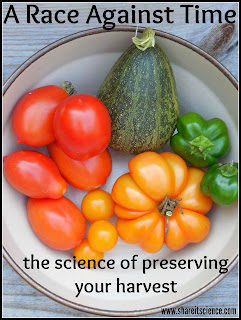
September 18th, 2015: A Race Against Time- The Science of Preserving Your Harvest

http://www.shareitscience.com/2015/09/glimpse-of-garden-week-24-lessons-from.html 
 http://www.shareitscience.com/2015/09/glimpse-of-garden-week-25-race-against.html

What will you plant next year? Gardening with kids? Do you have a school garden? Share your ideas! Comment below or connect with us on Facebook or Google+

(affiliate link)
Homegrown Collective

Lessons from Sunflowers

Sunflowers are by far one of my favorite garden flowers. They are fairly easy to grow, are big and bright and live up to their sunny name. They attract bees and birds. Sunflowers are also a great plant to grow with children.

Not only are sunflowers a lovely addition to the garden, but they can also be the launching point for several different science and math lessons. From types of flower and flower parts to biological phenomena like tropism, and natural math like the Fibonacci sequence, a sunflower can teach you a lot, let's see what there is to learn!


This post contains affiliate links, meaning I will receive a small commission (at no additional cost to you) if you make a purchase after clicking a product link. Please see disclosures page for more details. 
 

Composite flowers

Small flowers of the inflorescence are beginning to open. ©SBF
Sunflowers are composite flowers. If you look carefully at the center of a sunflower you may have noticed that there are a bunch of tiny flowers there. This clump of tiny flowers is called an inflorescence, or a cluster of flowers that make up one larger flower.

Many composite flowers have 2 types of flower parts. There are the petals that form what looks like rays of sun on a sunflower, then the smaller flowers in the inflorescence. You are probably familiar with many other members of this group of flowers- Dandelions, Black-eyed Susans, Asters and Hawkweed. 

Phototropism

You can observe phototropism in sunflower plants. Phototropism is the concept of a plant growing towards light. There are many tropisms, or plant movements to external stimuli. You'll notice this with your houseplants that lean toward the window and in your garden they learn toward the sun. 

Can you tell which side of the garden is shaded by trees and which is open to the sun?

Leaning sunflowers! ©SBF 2015
From seed to adult plant the sunflower grows towards the light. Here is a time lapse video of this process:


If you are interested in the idea of plants in motion, you'll want to check out Roger Hangartner's videos at his website, Plants in Motion. They are fascinating! See some sunflowers in motion here.

I also explored this concept earlier in the summer with the tendrils of my cucumber vines.

http://www.shareitscience.com/2015/07/glimpse-of-garden-week-16-tendrils.html


Sunflower Math!

The spiraling shapes in the seeds of a sunflower follow the Fibonacci sequence.
Fibonacci in the center of a sunflower! ©SBF 2015

You can find the Fibonacci sequence, 1, 1, 2, 3, 5, 8, 13, where each new number is the sum of the previous 2, all over the garden and in nature. I explored this concept in greater depth earlier in the summer. Go on a math scavenger hunt in the garden by following this link. 

http://www.shareitscience.com/2015/06/childrens-steam-festival-golden-ratio.html

Besides teaching us lessons in science and math, sunflowers are a cheery addition to any garden space!