Share it! Science : seasons
Showing posts with label seasons. Show all posts

Maple Syrup: Sweet and Sticky Science

In New England the sap buckets are going up on the sugar maple trees. As the thaw begins maple farmers are beginning to harvest sap for one of my favorite treats...maple syrup! 

There is so much to learn in the process of maple sugaring. Science, math, botany, engineering, history! Here is some background on the process of making maple syrup and lots of learning resources. Whether you hail from an area that makes syrup or not, there is something here to help you teach kids about maple syrup.  

When you are finished with the learning, may I suggest consuming some pancakes and syrup as a capstone to your maple syrup unit? 

This post contains affiliate links, meaning I make a small commission from purchases made from these links at no additional cost to you. Please see disclosures for more information. 


maple sugaring syrup science learning resources

Making Maple Syrup 

Maple syrup is a versatile sweetener full of antioxidants. A secret treasure humans have borrowed from nature. 

Maple syrup is a product made from the sap of a sugar maple tree. When winter begins to thaw into spring and temperatures fluctuate back and forth from warm to freezing the sap begins to flow. 

Positive pressure builds in the tree when temperatures rise above freezing. This pressure forces the sap out of holes made in the tree for sugaring. Then as temperatures dip to below freezing again, negative pressure develops. This causes suction to draw water into the roots, replenishing the sap. The freeze-thaw cycle allows sugar farmers to collect sap during a short window of time as winter turns to spring.

Native Americans and European settlers collected the sap of sugar maples as it began to flow during early spring thaws. Much as we do today, they painstakingly boiled it down into a syrup. It was an excellent way to preserve food without refrigeration.

tap in a sugar maple tree collecting sap science education resources

Today trees are still tapped and sap is collected in buckets, as has been tradition for years. More modern methods include collecting syrup through a series of plastic tubing and utilizing methods like reverse osmosis to maximize the time spent harvesting and boiling sap.

Sap is boiled down into syrup. In general it takes 40 gallons of sap to make 1 gallon of syrup. It is a time and labor intensive process for a small yield. Remember to thank a maple farmer next time you are enjoying some glorious maple syrup! 

Maple Sugaring Teaching Resources

If you are fortunate enough to live near a sugar bush, then perhaps you can take your class or children on a maple syrup field trip! If not, here are tons of other learning resources for learning at home or in the classroom.  

A maple video and worksheet for each grade Kindergarten through Junior high from Cornell: Maple in the Classroom. 

When will the sap run? A free printable math activity, identify which days the sap will run based on a month of temperature fluctuations. 

For grades 4-5th, 26-pages of background and student activities for maple sugaring season. 

Make your own maple candy from syrup in this Science Buddies activity.

boy collecting maple sap sugaring season

25-page digital download with videos, Maple Syrup Making Unit Study

K-2nd grade activity, Be a Sugar Maker, students role-play the process of maple sugaring.

Maple sugaring picture book list.

3-5th grade activity, Nature's Factory at Work, build a model of a tree and learn the process of photosynthesis. 

Tree rings activity, learn the age of a maple tree.  

Maple Mini Study for PreK-2nd grade.

kids collecting maple sap science education

6th-12th grade, learn about Maple Sugar Molecules and Crystals while making your own rock candy.

Free, downloadable maple information posters. 

Preschool and elementary Maple Syrup Study Unit, 8 activities. 

Many more Maple Syrup learning resources here!


More Maple Syrup Fun

Use that maple syrup with these awesome maple syrup recipes for kids

Some picture books to share with the kids on maple sugaring.  


10 Must-Have Printable Downloads for Fall Science Class

Looking for just the right print out to go along with your hands-on science lesson? Or maybe spruce up an old lesson or unit with something new? Here are 10 fun printable downloads you will find useful year after year during the fall term. We have seasonal and nature topics for early childhood and elementary school aged students covered with: Apples, Pumpkins, Trees and Leaves, Hibernation and Migration. Find some inspiration and discover something new for the new school year! 


This post contains affiliate links, meaning I receive a commission from purchases made through these links, at no additional cost to you. Please see disclosures for more information.


Apple Lesson Printables

Fall is the perfect time to study life cycles, especially those that result in some delicious treats, like the life cycle of an apple tree!  Check out this apple tree life cycle wheel for young learners who are discovering the steps in an apple tree's life cycle. 
 
After you take a trip to the orchard for apple picking, try this apple experiment and download the free printable science journal that goes along with it. Linked to a book in one of our favorite series, Zoey and Sassafras, it explores decomposition and food preservation using apples. It's a great student-led experiment because they have some freedom in what to use to try to preserve their apple slices. 


Pumpkin Lesson Printables 

Pumpkins are yet another super fun way to study plant life cycles. Here is a lovely pumpkin life cycle wheel that actually looks like a pumpkin when you are finished! 

Pumpkins are an easy tool for teaching about decomposition. One of my favorite ways is to use the picture book Pumpkin Jack by Will Hubbell. 

You can read about how I would integrate this story into a long-term lesson in observing the decomposition of a pumpkin here. Included in this post is a link to a free pumpkin observation printable. Or use this decomposing pumpkin study printable to not only set up a science experiment with your own pumpkin, but also integrate pumpkin learning through language arts. 

Pumpkin STEM lesson
My all time favorite elementary pumpkin lesson is a multi-day STEM observation of a pumpkin. Weighing, measuring, counting, floating (!?!) tons of science and math skills are used to learn more about a pumpkin. It's always a hit with the kids, especially if they have grown or picked out the pumpkins themselves. You can learn more about this pumpkin STEM lesson here, or find the instructions and observation worksheets in my Teachers Pay Teachers store here


Tree and Leaf Printables

If you live in an area with deciduous trees, then fall is probably one of your favorite seasons for its rainbow of foliage colors. It is a fun time to learn why the leaves change color and study the diversity of trees and their life cycles. 
 
Teach your kids or students tree identification with these simple fall leaf identification cards. They would also be great to take on a nature walk for a leaf scavenger hunt!

You will also want to check out this massive collection of tree printables from WildEarthLab, who creates some beautiful and useful environmental educational and science materials.

Migration Printables

Migration is one of the amazing and miraculous natural occurrences of fall. There are lots of opportunities to observe migration in nature, and also follow migration digitally

If you live in the northeastern United States there are many excellent locations for hawk watching as they migrate south for the winter. Download this free guide for non-commercial use to help you identify the hawks you are seeing in the sky. 

Monarch butterflies are migrators loved by many. Check out these ideas for studying Monarch migration in Preschool-12th grade. This is such a cool 3-D paper model download for learning about Monarch life cycles.


Hibernation Printables

What are animals doing in fall? Preparing for winter. Along with migration, hibernation is an interesting topic to delve into during the later fall months. 

The illustrations are gorgeous in this Charlotte Mason hibernation lesson pack. It would be great to print and laminate for a think-pair-share (or in this case, "read-pair-share") activity in your science classroom.

Introduce what it means to hibernate and begin to discover the creatures that do so with this free hibernation printable pack. 

Don't Miss These Printables!

If you are looking for other quality sources of printable nature or environmental science downloads, I would highly recommend these:

Tanglewood Hollow Digital and Printable Items

Mother Natured Nature Printables Club


Harness the Power of Nature this Fall!

What is not to love about fall? Crispy colored leaves on the ground, acorns, caterpillars, apples, pleasant weather...I could go on and on! It's the perfect time to get your children or students learning in nature.

Nature is a powerful teaching tool. It inspires kids to ask new questions, explore things they have not seen before and spending time outside has been shown to benefit kids overall health and learning. I've pulled together a bunch of resources to help you teach your students outside this fall. From pumpkins and apples to leaves and twigs, scavenger hunts to garden harvests, you'll find all the ideas you need to provide a nature-rich learning experience for your classroom or homeschool.

Fall Nature Lessons Science Experiments Activities

This post contains affiliate links, meaning I make a small commission (at no additional cost to you) from purchases made from these links. Please see disclosures for more information.

Observe Nature on a Scavenger Hunt

Get outside and put those powers of observation to good use. So many changes come with the turn of the season, there is a lot to see out there! Try one of these ideas:

Fall Nature Scavenger Hunts

Create Nature Art

Take advantage of those fall colors and the abundance of leaves that have dropped to the ground to create some great nature art. In choosing natural supplies for art pieces, students really take a closer look at these items than they might otherwise.

Nature Patterns STEAM Activity

Nature Symmetry Skills STEAM Lesson


A great way to guide these projects is with this nature printables pack. You can see how we've used our copy here. It is awesome not only for creating beautiful art pieces, but also mastering early math skills like symmetry and patterning.


Nature Patterning for Early Childhood Education

https://transactions.sendowl.com/stores/7006/28393

Study Animal Behavior in Fall 

In the fall some animals migrate, some bulk up for the winter. Explore fall animal behavior with these ideas:

Fall Animal Behavior Lesson Ideas

Learn with Fall Leaves

Leaves are in abundance on the ground and changing colors on the trees. Try these activities with fall leaves.


Backyard Science ebook
Fall Nature Lessons Activities


Science with Pumpkins and Apples! 

Experiment with some of nature's bounty this fall. Here are three easy inquiry science lessons that use pumpkins and apples!

Apple and Pumpkin Science Activities


Great Gloves and Marvelous Mittens: A STEM Challenge

http://www.onlypassionatecuriosity.com/great-gloves-marvelous-mittens-stem-challenge/


I'm excited to be a guest blogger over at Only Passionate Curiosity this week. Head there to read my post, "Great Gloves and Marvelous Mittens: A STEM Challenge".

This is a great activity to get kids thinking about how animals adapt to winter and how humans have borrowed some of these ideas. After designing and building their own glove or mitten they'll test their creation to see how well it stands up to the cold.

You'll find more seasonal science ideas on my Pinterest Boards:

Discovering Decomposition with Pumpkin Jack

Looking for an easy science investigation? Here is one with something you probably have around Halloween- all you need is your leftover jack-o-lantern. Download the pumpkin observation sheet below and kids can learn about life cycles and decomposition in a clear and simple way. We've also included a book suggestion so that you can also include some great children's literature while you're at it! Try this easy pumpkin science experiment at school with your students or with the kids at home.

Decomposition is such an important ecological cycle. One of the best ways to explore it with children without getting gruesome is by learning about composting. This October you can turn the inevitable process of your Halloween Jack-o-lanterns rotting out into a science investigation.

Easy Pumpkin Decomposition Science Experiment

This post contains affiliate links, meaning I may receive a small commission (at no additional cost to you) if you make a purchase through a product link. Please see disclosures page for more details. 

Easy Pumpkin Decomposition Science Experiment


Read the Picture Book Pumpkin Jack


First, inspire kids by reading the picture book, Pumpkin Jack. In this story, a boy named Tim carves a Jack-o-lantern and names it Jack. He enjoys watching Jack's glowing face in his room each night, until Jack begins to go bad and Tim's mom makes him get rid of him. Tim puts Jack out in the garden and watches him continue to decompose and change throughout the seasons.


Easy Pumpkin Decomposition Science Experiment


You can observe a pumpkin and how it changes as it decomposes too. Every few days make an observation of your pumpkin. You can take a picture like I did, or draw what you see. Make some notes. You can use this observation sheet to keep track. If you put the observation sheet on the refrigerator or a bulletin board where you will see it often you can observe your pumpkin throughout the fall and maybe even in the winter and spring.

Easy Pumpkin Decomposition Science Experiment

Things to observe:
  • What color does your pumpkin change?
  • Does it get moldy? What does it look like?
  • Did you get a frost? What happens to your pumpkin after a frost? 
What's happening to the pumpkin during this process? Decomposition is nature's way of recycling nutrients. Exposure to the elements begins to break down the pumpkin's cells and eventually decomposers like worms and other invertebrates, mold and bacteria go to work breaking the pumpkin down until eventually it turns into compost.
Easy Pumpkin Decomposition Science Experiment
Brave scientists will want to investigate that mold and bacteria more closely. You might even want to see if you can grow some more to observe. To do so safely, get a bacteria science kit.

Learn More About Compost and Decomposition


Children can learn more about the fabulous creatures that work to turn living things back into soil at Growing with Science. For another great picture book about pumpkin decomposition to supplement this post, check out this link. Add to your science library with these children's books on compost and decomposition.


Want to try building a worm compost bin? You can use it all year long. Find out how here.

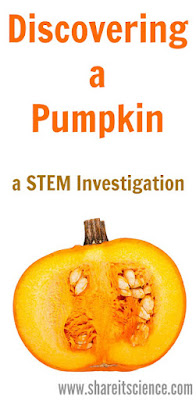
For more pumpkin STEM, check out my post, Discovering a Pumpkin: STEM Investigation

http://www.shareitscience.com/2014/10/pumpkin-discoveries.html
 

Not sure what to do with that surplus of Halloween candy? Try these science experiments with candy.

Cool Halloween STEAM Projects

STEAM Halloween Activities for Home or School

More autumn inspired science at my Pinterest page: 

Monarch Migration, Ideas for Pre-K-12

As the seasons change from summer to fall to winter, animals living in more northern climates have three options: migrate, hibernate or bulk up! One of the most amazing migrations is that of the monarch butterfly. 

If you are studying about migration this fall, or about winter adaptations, then the monarch butterfly is a fascinating example. Here are ideas for learning activities for students in preschool all the way through high school. 


This post contains affiliate links, meaning I make a small commission from purchases made from these links at no additional cost to you. Please see disclosures for more information. 

image: Kenneth Dwain Harrelson [GFDL or CC BY-SA 3.0], via Wikimedia Commons

All About Monarch Butterfly Migration


Monarchs are the only butterflies to make a round-trip migration, similar to a bird. Other types of butterflies overwinter as either larva or pupa. Since adult butterflies depend on flowers for nectar they can't find food in areas where snow and ice are the norm.

In order to travel long distances (sometimes up to 3,000 miles!) they take advantage of warm pockets of air called thermals, and air currents. Each day they travel 5-100 miles until they reach their winter resting ground.

The monarchs that I see flitting about in the Northeastern part of the U.S. will head to Mexico, while those in the Northwestern part of the country spend their winter in California.

image: USDA Forest Service
If you're studying monarch butterflies or migration in your school or homeschool there are activities that can be done with all ages. Citizen science projects are wonderful for older students, while younger students enjoy learning about life cycles and the concept of migration.

Here are some ideas for learning about monarch butterflies at each age level.

Study Monarch Migration in Early Childhood

  • Role play the life cycle of a butterfly. Have students curl up in a ball to be an egg, then hatch and stretch and inch along like a caterpillar. Then they'll find a cozy spot and stay still for a bit while they are a pupae. Finally they are ready to climb out of their chrysalis and flap their wings as a butterfly. One of my favorite books to accompany this activity is Lois Ehlert's Waiting for Wings.


  • If it is spring, you can watch a butterfly life cycle right in the classroom. My family raises butterflies successfully every spring. You can learn all about raising butterflies here. You can use a live butterfly kit, or butterflies from your local butterfly conservatory, observe the stages of metamorphosis, then have a release party your butterflies emerge from their chrysalids.
  • Read a story and then show on a globe or map where the butterflies migrate to. Developmentally, maps are a little tricky for Early Childhood, but you will at least be conveying the message that they go from one place to another during migration. One of my favorite monarch migration picture books to read to little ones is Gotta Go, Gotta Go by Sam Swope. The rhyming text and adorable pictures are perfect for a read-aloud. 

Study Monarch Migration in Elementary


  • Watch and learn about monarch life cycles with the Kratt Brothers with this lesson plan and video from Wild Kratts on PBS. These resources are available through PBS LearningMedia, which I highly recommend exploring. There are tons of great resources and short video clips to hook students before you delve into your hands-on lessons. 
  • Make these cool 3-D Monarch Life Cycle paper models!
  • Read Hurry and the Monarch a cute tale of a monarch's life cycle through migration, with lovely illustrations.  


Study Monarch Migration in Middle and High School


image: William Warby [CC BY 2.0], via Wikimedia Commons
 
If you are interested in more migration activities, check out my post, "See it? Share it! Bird Migration".

For other citizen science opportunities involving insects, read "Insect Investigations: Summertime Citizen Science".

Think monarchs are beautiful? I do! Find a great photo and links to monarch photography at the Growing With Science Blog.


Fall Science Preview!


It may not be officially fall until the Autumnal Equinox, but with the start of school and a chill in the air it does feel like it is already here. This is one of my favorite seasons! I wanted to remind you of some of the fun autumn science posts we've done in the past.

I'm also very excited about the posts we have lined up for the next few weeks and wanted to give you a sneak peek!
http://www.shareitscience.com/2015/09/pirate-science-fools-gold-parrots-and_11.html

First of all, Talk Like a Pirate Day is coming up! This year I'll be participating in another fun blog hop hosted by Witty Hoots. We'll be exploring some pirate science with optical illusions! Check out last year's pirate science post here.

https://transactions.sendowl.com/stores/5742/28393

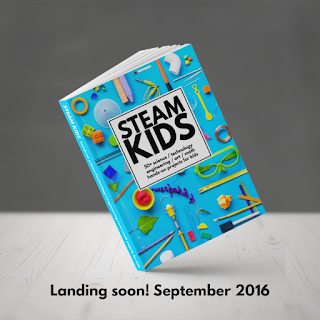
In the next few weeks, I'm excited to share an incredible resource for parents and educators- STEAM Kids, a book chock full of activities that explore Science, Technology, Engineering, Art and Math! Look for my review and more information soon.
https://transactions.sendowl.com/stores/5742/28393

Over the next 30 days, I will be reviewing www.Science4Us.com. Science4Us is an engaging, elementary science curriculum that teaches science using a fun, interactive approach. If you have your own blog and would like to review Science4Us, check out their homeschool review program. Make sure to come back and read my full review!

http://www.shareitscience.com/2014/10/pumpkin-discoveries.html

As Halloween approaches, there is always some great science to be done with pumpkins! Get ready to make some pumpkin discoveries with these pumpkin ideas and stay tuned for a post with a new pumpkin science exploration of decomposition!

In the meantime you can revisit these autumn themed science posts:

You can also follow my autumn science board on Pinterest for tons of great ideas:
 

Celestial Events this Holiday Season

winter solstice christmas full moon new years comet

The next couple of weeks hold some special events in the night sky, the Winter Solstice, a Christmas Full Moon and a New Year's Comet!

Winter Solstice
December 21st or 22nd is the Winter Solstice (depending on your time zone). This marks the official start of the winter season, and in the Northern Hemisphere the shortest day of the year. (Yes, that means slowly but surely we will start gaining light in the mornings and evenings again! Hallelujah!)

We experience 2 solstices and 2 equinoxes each year. The solstices, in winter and summer, are when Earth is getting the least direct sunlight due to the tilt of our axis, and the most direct sunlight. To better understand our Earth's axis and the changing seasons, check out my post: The Changing Seasons: So Much More Than Temperature! This is a topic laden with science misconceptions held by children and adults. Do you think you understand the concept of seasons?

Christmas Full Moon
Did you know that the last full moon of December is called the "Full Cold Moon" because of it's proximity to the start of winter? This year, we will experience a Christmas full moon for the first time since 1977. It won't happen again until 2034, so be sure to look up for this celestial Christmas gift!
full moon NASA image apollo 11
image: NASA

New Year's Comet Catalina
Catalina, a comet discovered and named after the Catalina Sky Survey in 2013 is making its way across the sky in the next few weeks. Star gazers are hoping for some naked-eye viewing of the comet to help ring in the New Year.

Lovejoy Comet Passing Through Ursa Major (image: NASA/MSFC/Jacobs Technology/ESSSA/Aaron Kingery)

Although the comet will pass closest to Earth on January 17th, there are great opportunities to view it on the evenings around December 31st. To locate the comet, you'll need to find the constellation Bootes. Find the reddish star Arcturus and near the star you should see the fuzzy tail of the comet. A pair of binoculars will help! For some tips and resources for helping navigate the night sky digitally or with a star map visit this post and scroll to the resource section.

Happy Star Gazing! 

Resources: 
Photobucket

Woolly Bear Caterpillars- Not Just Cute and Fuzzy!

Whether you call it a woolly bear, hedgehog caterpillar, woolly worm or a black-ended bear, you are probably familiar with the black and brown woolly bear caterpillar. These moth larva are favorites of many, and besides being fuzzy and cute are well known due to their incredible adaptations and interesting folklore.

woolly bear caterpillar
(source)

This post may contain affiliate links, meaning I make a small commission from purchases made through these links at no additional cost to you. See disclosures for more details.
 
woolly bear caterpillar
Woolly Bear By Micha L. Rieser (Own work) [CC BY-SA 4.0], via Wikimedia Commons

Woolly Bear Caterpillar Folklore


A common bit of folklore in the United States is that this caterpillar can help predict the weather! Just like Punxsutawney Phil predicts the length of winter, people believe that the width of the different bands on the caterpillar's bristly body indicate the severity of the winter. The myth goes something like this: the wider the brown/copper colored band in the middle is, the milder the winter. There are variations of this story, but that is the most pervasive.

This idea was made even more popular in 1948 by a study by Howard Curran, a curator of Entomology at the American Natural History Museum. Curran went to Bear Mountain State Park in NY with several other scientists and collected 15 woolly bear specimens. The study indicated that there was a correlation with the size of the bands and the winter weather. Curran continued the study for several more years. Although at the time the results were popular, further research of much larger sample sizes indicates that there is simply too much variability in individuals of these caterpillars for their predictive powers to be true. Although they might not be able to predict winter weather, they are the stars of many festivals and events, including the Woolly Bear Festival in Vermillion, Ohio  and the Woolly Worm Festival in Banner Elk, North Carolina.


Amazing Winter Adaptations of Woolly Bear Caterpillars


The really fascinating fact about these caterpillars is their ability to weather the winter months by freezing themselves solid. Their bodies actually break certain parts down and begin to produce glycerol, which works as an "anti-freeze" to prevent cell damage. The structure of their bristly hair, or setae, allows them to begin freezing on the outside before their bodies freeze.


Although all woolly bear caterpillars, or Pyrrharctia isabella, are capable of weathering freezing temperatures, the ones that live in the Arctic are the most amazing. Due to short periods of warm weather, the caterpillar will go through this freezing and thawing process up to 14 times (in other words, 14 years) before it makes a cocoon and emerges as an adult Isabella Tiger moth! 
 
Isabella Tiger Moth adult woolly bear caterpillar
Pyrrharctia isabella – Isabella Tiger Moth By Andy Reago & Chrissy McClarren  [CC BY 2.0], via Wikimedia Commons
Pretty amazing, right? To learn more about these incredible insects, check out the resources and book suggestions below!

Woolly Bear Activities with Kids


Children are drawn to caterpillars. You should be cautious with fuzzy ones as handling them can be irritating to the skin. Woolly bears hairs are not as harmful as other fuzzy species, but they can still break off in the skin and be irritating. It is a good idea to have a "look, don't touch" policy with these at home or in the classroom. 


Open ended learning ideas with woolly bear caterpillars in the classroom.

See it? Share it! Bird Migration

As the seasons change plants and animals exhibit many adaptations for survival. Migration is a behavior adaptation. Many birds migrate to warmer climates when the weather gets cold. Fall is an awesome time to study animal migration in your science classroom. 

Have you noticed a lot of bird activity outside house recently? I certainly have. Lots of different types of birds very busily collecting seeds from this summer's flowers, and scratching around in the fallen leaves. You can tell that the seasons are changing and preparations are happening for the cold weather that will soon be upon us.


This post may contain affiliate links, meaning I receive a small commission when you make purchases through these links at no additional cost to you. Please see disclosures for more information.


All About Bird Migration


How can you find and observe birds during the months of fall? Which birds migrate?

Birds migrate to be sure they can find enough food to feed themselves throughout the year. For birds whose breeding grounds are in climates that receive snow or frigid temperatures this means that many have to travel to warmer areas. Migrating is a very difficult task, and many birds do not make the trip. This time of year birds are bulking up so that they will have the energy stores to fly hundreds to tens of thousands of miles to their winter habitat.


Neotropical Migratory Birds are those that spend their spring and summer in Canada or the United States and the winter in warmer places like Mexico, Central and South America, or the Caribbean. There are many species in North America that fall into this category. As migration is difficult, actions like the Neotropical Migratory Bird Conservation Act are in place to aid in conservation efforts and maintain our avian populations.


Observing Bird Migration


How can you observe bird migration? Migration forecasts are available through Cornell with their BirdCast site. You may also live in one of the regions recognized as a migration flyway. Birds don't just fly straight south- there are 4 major flyways in the United States that many bird species follow. You can also visit eBird and find where certain species have been spotted in your area.

Observing the migration of hawks is very popular and there are many sites devoted to this. You can find information and data at the Hawk Migration Association of North America and HawkCount sites.

Ruby Throated Hummingbird ©SBF


Neotropical Migratory Birds


Which birds migrate? Many that you are familiar with! For a list of birds that migrate to warmer climates see this table from the Neotropical Migratory Bird Conservation Act.

Tracking wildlife is not always easy, although the data being compiled about bird migration is improving all the time. Between technological advances such as transmitters and GPS, and the work of citizens through programs like eBird and Project Feederwatch, we have a clearer picture of where birds are and where they are going.

Educational Resources for Learning About Bird Migration


Click on the links below to learn more about bird migration, some great book suggestions for children, and resources and lesson plans about bird migration! 

Read more:


Bird Migration Resources: