Share it! Science : "Spectacular Summer Science Series"
Showing posts with label "Spectacular Summer Science Series". Show all posts

Nocturnal Animals and Light Pollution from Growing With Science Blog

We are wrapping up the Spectacular Summer Science Series this week with another great post from Growing with Science. Check out some great activities for kids here: "Spectacular Summer Science: Nocturnal Animals and Light Pollution". With the warmer weather, summer is a wonderful time to explore night-time science!

http://blog.growingwithscience.com/2016/08/spectacular-summer-science-nocturnal-animals-and-light-pollution/
http://blog.growingwithscience.com

For other great summer science ideas, check out the other posts in this series and follow my Pinterest board- Summer Science!

 
Excited to do more science this summer? This is just one post in the Spectacular Summer Science Series! Sign up to get Share it! Science News posts by e-mail so you don't miss out on any science news or learning activities!

http://www.shareitscience.com/2016/06/summer-science-STEM-activities.html


Enter your email address:


Delivered by FeedBurner

Solar Oven STEM: Engineering Design Challenge

When the sun is hot and the kids are bored, you need an engaging project. Challenge your kids or students to design and build their own solar oven! This is a great way to keep kids busy with a hands-on project for hours. The bonus is, you most likely already have the materials they need in your kitchen or recycling bin!

When I was teaching science my 6th graders would end each year engineering their own solar oven. It was always a big hit. This is a great activity that is certainly not limited to middle school. Anyone with some creativity and building skills can tackle it!


This post contains affiliate links, meaning I will receive a small commission (at no additional cost to you) if you make a purchase after clicking a product link. Please see disclosures page for more details.

What is a solar oven? 

In many places around the world, solar ovens are used to cook food with the sun. In North America, they are mostly used for camping, solar oven cooking groups and hobbyists. If you have an effective solar oven, you can cook just about anything you'd cook in a regular oven. For this design challenge, I'd recommend cooking something that can be cooked without too much concern over spoilage. S'mores, nachos, English muffin pizzas, etc. are good kid-friendly choices to start out.

The Challenge:

Build a solar oven that effectively "cooks" your desired item. The #1 rule is: do not search for solar oven designs on the internet! Creativity and your own ingenuity will take you far with this one!
DIY solar oven engineering challenge

Potential Materials:


(This list can obviously be tweaked as you see fit, however these materials have been chosen for safety, and age appropriate degree of challenge.)
**NO: glass, magnifying glasses or sheet metal**

DIY solar oven design engineering challenge


Science Ideas to Consider:


3 Types of Heat Transfer:


Convection 

You've probably heard that "heat rises". Convection is the science term for this phenomena. Convection is the movement of a fluid (air or liquid) where hotter and less dense material rises, and cooler, more dense material sinks. We experience convection when heating our homes, when swimming in a large body of water, and in convection ovens, just to name a few examples.
  • When building your oven, imagine that heat will rise. How can you get the heated air to stay close to what you want to cook?

Conduction 

Conduction is when heat is transferred directly from one objects to another when they are touching one another. Some materials conduct heat more easily. A good example is when you leave a metal spoon in a mug of hot cocoa. If it has been a few minutes, you'll notice when you touch the spoon again, it is very hot. It has conducted heat directly from the hot liquid. Conduction is what heats something that you put on the stove. The pan is directly touching the hot stove, therefore its contents are heated up.
  • When you design your oven, will the cooking surface conduct heat?

Thermal Radiation 

Thermal radiation does not require direct contact. Heat travels in waves from one source to another through air, or another substance. Heat from the sun is the best example of thermal radiation. The sun is not directly touching what it heats up, the heat travels through the air.
  • This is important to think about when building your oven. Solar energy is your main form of heat. How will you harness it?

Insulation/Reflection


Insulation

Insulation is the opposite of conduction. You use insulation to keep heat from escaping, or to keep heat from conducting too quickly. Insulation is used in the walls of our houses to keep them warm during the winter. We also use oven mitts to insulate our hands from hot dishes that we remove from the oven.
  • Where do you want to keep the heat in your oven? Where do you want to make sure heat can flow easily?

Reflection

Sunlight can be reflected, or "bounce back" from smooth, shiny surfaces. This can be a way of redirecting light. Light creates heat energy.
  • How can you use reflection to bounce light energy where you want it in your oven?

Designing and Building Your Oven:


1. Start with a blueprint! Draw what you hope to build, and label the materials you will use.

2. Build your oven.

3. Test it out! Place your oven in an area that will get steady sunlight. Keep in mind that houses and trees can cast large shadows when as the sun passes overhead.

4. If your oven didn't work the way you'd like, how can you change it to see if you can make it work better?

5. Test it again!

This is the process professional inventors and engineers use. You're well on your way to becoming an engineer! 

You can use your solar oven to make some recycled crayons! Check out the instructions for solar oven recycled crayons here. 

If your oven is working great and you are interested in cooking full family meals with the sun, you might want to check out these cool commercial solar ovens from Go Sun Stove. Portable Solar Cooker


Excited to do more science this summer? This is just one post in the Spectacular Summer Science Series! Sign up to get Share it! Science posts by e-mail so you don't miss out!

http://www.shareitscience.com/2016/06/summer-science-STEM-activities.html


More Summer Science Ideas:

Over 40 Water and Ice Science Activities to Keep You Cool!


It's hot out there! Time to cool off and do some learning at the same time. Try out some of these water and ice science experiments, STEM challenges and play activities!

Water and Ice Science Experiments:

Ice!

Try these 8 amazing ice experiments on iGameMom.

Learn how to instantly freeze water- a little science magic from Preschool POWOL Packets.

Explore the effects of salt on ice with this melting experiment from Life with Moore Babies, and then try polar ice fishing with this activity from JDaniel4's Mom!

Your kids will love making edible glowing ice cubes with Go Science Girls.


https://gosciencegirls.com/glowing-ice-cubes-edible-sensory-science-play/

Maybe this fizzing ice cube activity from The Kindergarten Connection is what you're looking for!

Try this ice temperature experiment at Capri Plus 3.

Water!

Explore the concept of density with these activities:
www.buggyandbuddy.com

A simple water displacement experiment from Life with Moore Babies.

Explore the surface tension of water with paperclips on Buggy and Buddy.

Investigate the science concept of volume and other water experiments with Inspiration Laboratories.

http://inspirationlaboratories.com/w-is-for-water-experiments/

Can you take the salt out of salt water? Make a solar still with Capri Plus 3, or try this cool desalination experiment from Schooling a Monkey.

What happens when you mix soil, rocks, sand and other Earth materials with water? Find out at Preschool Tool Kit.

Use some fizzy water to make raisins dance right here on Share it! Science News.

http://www.shareitscience.com/2015/06/childrens-steam-festival-are-you.html

Some of my favorite water explorations are sinking and floating experiments! Try these:

Try 7 more fascinating water experiments from iGameMom.

http://igamemom.com/water-science-experiments-for-kids/


Simple and fun water investigations at JDaniel4's Mom.

Quite literally have a blast building a water rocket at KCedventures.

Investigate Cartesian divers on Buggy and Buddy.

Try this easy and engaging experiment about controlling water flow at JDaniel4's Mom.

Explore weather and convection currents to learn what causes storms with Frogs-and-Fairies.

How do liquids contribute to salt crystallization? Find out with this fun science craft from Go Science Girls.

Measure different forms of water with this easy experiment from JDaniel4's Mom.

Explore a tide pool- right from your own home! Buggy and Buddy

How does water refract light? A fun exploration on Go Science Girls.

https://gosciencegirls.com/refraction-light-glass-water-play-steam-kids/

Water Conservation and Testing

Learn how to test the quality of a waterway using biology and chemistry here on Share it! Science News.


http://www.shareitscience.com/2015/06/science-teachers-toolbox-testing-water.html


Try this STEM activity about safe drinking water from STEAM Powered Family.

http://www.steampoweredfamily.com/activities/safe-drinking-water-lesson/

One of my favorite demonstrations to help children (and adults!) understand why we must conserve water! Share it! Science News

STEM Challenges and Projects

Build an ice cube igloo! Preschool POWOL Packets

Build a pvc waterway to investigate physics! Rubber Boots and Elf Shoes

http://rubberbootsandelfshoes.blogspot.ca/2013/06/pvc-pipesconnectorswaterphysics.html

Why do boats float? 10 ways to build boats with pantry items from Thriving STEM.

http://www.thrivingstem.com/2014/11/why-boats-float-ways-to-make-toy-boats.html


Just for Fun: Ice and Water Play Activities

Find all of the great activities included in this post on my Pinterest Board: 


Excited to do more science this summer? This is just one post in the Spectacular Summer Science Series! Sign up to get Share it! Science News posts by e-mail so you don't miss out!

http://www.shareitscience.com/2016/06/summer-science-STEM-activities.html


Enter your email address:


Delivered by FeedBurner

Over 25 Ways to Explore and Learn in Nature


Summer is a great time to get outside, have some fun and learn along the way. Here are some awesome ideas from fellow bloggers for creating nature spaces, building nature kits, designing your own nature camp or school and plenty of science and nature activities to try outside!

Create a Nature Space

Create your own nature table with this idea from Witty Hoots via Rainy Day Mum.
http://rainydaymum.co.uk/nature-table-and-journal

Jazz up your nature table explorations with some mirrors with Our Whimsical Days.

Love visiting nature centers? Create your own right at home with this DIY nature center idea from Joy in the Home. 

Turn your backyard into a science lab for under $10! Learn how at KCedventures.

Create this awesome water discovery center from JDaniel4's Mom in your backyard!

Do your kids have a growing rock collection? Turn your rockhound's treasures into an outdoor version of this rock exploration center from Buggy and Buddy.

www.buggyandbuddy.com


DIY Nature Camp/Club/School:

Organize your own Nature Club for your kids or their play group! Great ideas from Preschool Powol Packets. 

Do your kids love nature? Create your own summer Nature School! via Teach Beside Me
 
http://teachbesideme.com/starting-a-summer-nature-school/


Here are some fun ideas for running a summer science camp from Little Bins for Little Hands.

http://littlebinsforlittlehands.com/mad-scientist-science-camp-for-kids/
www.littlebinsforlittlehands.com
(affiliate)
Build Your Own Nature Kit:

Gather together all the essentials for an awesome Nature Study Kit, via Rainy Day Mum.

http://rainydaymum.co.uk/nature-study-kit-kids
www.rainydaymum.co.uk

Build a nature walk bag with these great suggestions from Joy in the Home.

Looking for a great nature kit that is also a wonderful gift? Create your own Insect Nature Explorer Kit, Discovering Nature Kit, or Bird Watching Kit with these ideas from Non-Toy Gifts.

http://nontoygifts.com/gifts-for-kids-diy-bird-watching-kit/

Nature and other Outdoor Science Activities:

Build an Natural Balance: STEM Engineering Challenge- STEAM Powered Family

http://www.steampoweredfamily.com/activities/natural-balance-outdoor-stem-challenge/

Over 100 Natural Science Activities- iGameMom

http://igamemom.com/natural-science-for-kids/

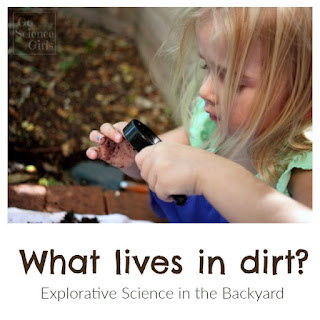
What Lives in Dirt? Exploration- Go Science Girls
https://gosciencegirls.com/dirt-backyard-science-experiment/
Top Tips for Rock Pooling- Rainy Day Mum

http://rainydaymum.co.uk/rock-pooling

The Beginner's Guide to Nature Journaling- Joy in the Home

Create Your Own Nature Journal for Kids (with a free printable)- KCedventures

Free Nature Journal Printables- Homeschool Encouragement

Explore Nature- Joy in the Home 

12 Simple Nature Play Ideas- Red Ted Art

Exploring and Painting in Nature- Natural Beach Living


http://www.naturalbeachliving.com/2014/07/exploring-and-painting-in-nature.html


The Best Place for Free Craft Supplies (Nature)- Mosswood Connections 

9 Reasons to Gather Natural Materials for Arts and Crafts- Danya Banya

Color Changing Oxeye Daisies- Frogs and Fairies

Can You Start a Fire with a Magnifying Glass? - Go Science Girls

Off Screen with App: Make a Backyard Water Wheel- iGameMom

Excited to do more science this summer? This is just one post in the Spectacular Summer Science Series! Sign up to get Share it! Science News posts by e-mail so you don't miss out!

http://www.shareitscience.com/2016/06/summer-science-STEM-activities.html


Enter your email address:


Delivered by FeedBurner

Fish Activities for Kids from Growing With Science

For this week's Spectacular Summer Science Series post, head over to Growing with Science for "Spectacular Summer Science: Fish Activities for Kids". You'll no doubt be spending some time near the water this summer, here is your opportunity to learn some fish anatomy, identification and behavior!

(Public Domain Photo via Visual hunt)


For other great summer science ideas, check out the other posts in this series and follow my Pinterest board- Summer Science!

 
Excited to do more science this summer? This is just one post in the Spectacular Summer Science Series! Sign up to get Share it! Science News posts by e-mail so you don't miss out!

http://www.shareitscience.com/2016/06/summer-science-STEM-activities.html


Enter your email address:


Delivered by FeedBurner

Pickle Science with Thriving STEM

For this week's Spectacular Summer Science Series post, head on over to Thriving STEM  for "How To Learn Chemistry By Making Delicious Pickles". Science is always a little more fun when you add something edible into the mix, don't you think? This is a perfect summer time family activity.

www.thrivingstem.com

For other great summer science ideas, check out the other posts in this series and follow my Pinterest board- Summer Science!

 
Excited to do more science this summer? This is just one post in the Spectacular Summer Science Series! Sign up to get Share it! Science News posts by e-mail so you don't miss out!

http://www.shareitscience.com/2016/06/summer-science-STEM-activities.html


Enter your email address:


Delivered by FeedBurner

Build Your Own Butterfly Feeder: The Great Backyard Butterfly Experiment!

Pollinator Week happens each June! What better time to investigate one of my favorite plant pollinators? Butterflies!

I decided to build some butterfly feeders to see if I could attract even more butterflies to my yard this year. This will be an experiment that will last all summer long. I want to know where butterflies spend the most time in my yard and what type of butterflies visit. You can try it too!
 
If you want to try raising your own butterflies, check out how we do it here. It's an exciting and fairly simple process. We look forward to getting our caterpillars each spring!
 

This post contains affiliate links, meaning I may receive a small commission if you purchase something from one of these links, at no additional cost to you. Please see disclosures for more information. 


Build your own butterfly feeder

First I made two different types of butterfly feeders. One is a jar feeder, and the other is a plate feeder. Both used either recycled materials, or things I found around the house. I used the following materials:

DIY Build Your Own Butterfly Feeder

To make the jar feeder:

1. Punch a hole in the lid with the hammer and nail.

2. Cut a strip of sponge and poke it through the hole in the lid. You may need to use the nail, or a pair of tweezers to get it through.


3. Decorating your jar with bright flower colors or faux flowers can help attract your butterflies. I used some bright foam insect stickers.

4. Tie some string on the jar to create a hanger. Remember that your jar will hang upside down, with the sponge sticking out the bottom. I added a little duct tape to secure the string, just in case!

5. Make the sugar solution. Mix 4 parts warm water, 1 part sugar to dissolve.

6. Fill your jar, flip it over and hang it up!

DIY Build Your Own Butterfly Feeder

The plate feeder was even easier to make.

1.  Poke holes for the string with the hammer and nail. If you have a scrap block of wood to hammer the nail into, it helps prevent the plastic from cracking.


2. Make a hanger with some string.

3. You may want to find something with a little weight, like a rock to place in the middle of the plate to keep it from blowing too much in the wind.

4. Fill your plate with bright fruit. Slices of banana that have been in the freezer, and orange slices are good choices. I varied what was on my feeder based on what I had in the house that day. You can add some orange juice or sugar solution to help keep the fruit from drying out.

**Watch your fruit and replace it if it begins to get dried out or moldy. Also keep in mind that any type of feeder can attract unexpected and possibly unwanted animals to your yard. For example, if you are in an area with black bears, it's not a good idea to leave your feeder out over night.**

Observe Butterflies

Now you have two feeders to observe, and any plant that butterflies enjoy visiting in your yard! You can now begin your experiment. Find out which plant or feeder the butterflies in your yard prefer. Begin making observations. You can use this printable observation sheet to keep yourself organized.

Any time you put a new feeder in your yard, it takes time for the animal you are hoping for to establish itself. When I hung my feeders the Eastern Tiger Swallowtail butterflies that are plentiful in our yard were very busy slurping nectar from the late-blooming lilac bush nearby. I coaxed them to the feeder with some lilacs. They are still more interested in these flowers than the feeder. I wonder what will happen once the lilacs are finished blooming? The only way to find out is to keep making good observations!


You will no doubt observe other visitors to your feeders as well. Within a few days, I noticed a pair of Evening Grosbeaks swoop down and check out the feeders, quickly moving on once they realized there were no seeds to be had. I've also spotted ants attracted to the fruit.

Once you've found your butterflies to observe, you'll want to identify them! There are so many different types of insects, and so many different butterflies! Where do you start?

Check out Growing with Science's excellent guide "Butterfly Identification for Beginners" to get you started.


Excited to do more science this summer? This is just one post in the Spectacular Summer Science Series!

http://www.shareitscience.com/2016/06/summer-science-STEM-activities.html

Want to learn more about pollinators? Check out these posts: 

http://www.shareitscience.com/2016/04/pollinators-picture-perfect-science-lesson.html

http://www.shareitscience.com/2015/04/grow-themed-flower-garden-with-your.html