Share it! Science : botany
Showing posts with label botany. Show all posts

Maple Syrup: Sweet and Sticky Science

In New England the sap buckets are going up on the sugar maple trees. As the thaw begins maple farmers are beginning to harvest sap for one of my favorite treats...maple syrup! 

There is so much to learn in the process of maple sugaring. Science, math, botany, engineering, history! Here is some background on the process of making maple syrup and lots of learning resources. Whether you hail from an area that makes syrup or not, there is something here to help you teach kids about maple syrup.  

When you are finished with the learning, may I suggest consuming some pancakes and syrup as a capstone to your maple syrup unit? 

This post contains affiliate links, meaning I make a small commission from purchases made from these links at no additional cost to you. Please see disclosures for more information. 


maple sugaring syrup science learning resources

Making Maple Syrup 

Maple syrup is a versatile sweetener full of antioxidants. A secret treasure humans have borrowed from nature. 

Maple syrup is a product made from the sap of a sugar maple tree. When winter begins to thaw into spring and temperatures fluctuate back and forth from warm to freezing the sap begins to flow. 

Positive pressure builds in the tree when temperatures rise above freezing. This pressure forces the sap out of holes made in the tree for sugaring. Then as temperatures dip to below freezing again, negative pressure develops. This causes suction to draw water into the roots, replenishing the sap. The freeze-thaw cycle allows sugar farmers to collect sap during a short window of time as winter turns to spring.

Native Americans and European settlers collected the sap of sugar maples as it began to flow during early spring thaws. Much as we do today, they painstakingly boiled it down into a syrup. It was an excellent way to preserve food without refrigeration.

tap in a sugar maple tree collecting sap science education resources

Today trees are still tapped and sap is collected in buckets, as has been tradition for years. More modern methods include collecting syrup through a series of plastic tubing and utilizing methods like reverse osmosis to maximize the time spent harvesting and boiling sap.

Sap is boiled down into syrup. In general it takes 40 gallons of sap to make 1 gallon of syrup. It is a time and labor intensive process for a small yield. Remember to thank a maple farmer next time you are enjoying some glorious maple syrup! 

Maple Sugaring Teaching Resources

If you are fortunate enough to live near a sugar bush, then perhaps you can take your class or children on a maple syrup field trip! If not, here are tons of other learning resources for learning at home or in the classroom.  

A maple video and worksheet for each grade Kindergarten through Junior high from Cornell: Maple in the Classroom. 

When will the sap run? A free printable math activity, identify which days the sap will run based on a month of temperature fluctuations. 

For grades 4-5th, 26-pages of background and student activities for maple sugaring season. 

Make your own maple candy from syrup in this Science Buddies activity.

boy collecting maple sap sugaring season

25-page digital download with videos, Maple Syrup Making Unit Study. 

K-2nd grade activity, Be a Sugar Maker, students role-play the process of maple sugaring.

Maple sugaring picture book list.

3-5th grade activity, Nature's Factory at Work, build a model of a tree and learn the process of photosynthesis. 

Tree rings activity, learn the age of a maple tree.  

Maple Mini Study for PreK-2nd grade.

kids collecting maple sap science education

6th-12th grade, learn about Maple Sugar Molecules and Crystals while making your own rock candy.

Free, downloadable maple information posters. 

Preschool and elementary Maple Syrup Study Unit, 8 activities. 

Many more Maple Syrup learning resources here!


More Maple Syrup Fun

Use that maple syrup with these awesome maple syrup recipes for kids! 

Some picture books to share with the kids on maple sugaring.  


Plant a "Garden Friends" Themed Garden for Kids

Gardening with children is rewarding for adults and children alike. It can teach important science principles such as life cycles, botany, wildlife habitats, food webs and ecosystems. It is also full of character-building life lessons like a sense of place and responsibility, sustainability and self-sufficiency. 

Planning and growing a themed garden is a great way to get children excited about their plants. In the past we have explored growing a Pizza or Taco garden, growing an Alphabet garden and growing a Rainbow or Pollinator garden. This time around we are going to give you some inspiration for a "Garden Friends" themed garden, otherwise known as companion planting.

Companion planting kids garden

This post contains affiliate links meaning I make a small commission from purchases made from these links at no additional cost to you. See disclosures for more information.  

We are also excited to be hosting a Renee's Garden seed giveaway. If you aren’t already familiar with Renee’s Garden seeds, I highly recommend exploring their offerings as you plan your garden. I love all of the unique varieties. With unusual heirlooms and plants that thrive in containers and small spaces they offer many good choices for a small home garden or school garden.

You will find details and the giveaway entry form at the bottom of this post.

Garden Friends: What is Companion Planting?

Companion planting is the concept of growing plants that compliment each other or are helpful to one another together. For example, planting something that grows tall, like peas on a trellis, where they can shade a friend that needs cooler conditions like lettuce from the mid-day sun. 

Plants can be friends because one repels or traps insect pests that are damaging to another. Planting basil around tomato plants can deter tomato pests. Planting flowers like nasturtium act as attractive insect traps. 

Plant friends can be those that do not compete for the same nutrients in the soil. Radishes that grow quickly and grow to shallow depths can be grown with carrots that grow deeper in the soil.  

gardening with kids themed gardens


The Three Sisters

An ancient method of companion planting comes from the Native Americans. Originating in North America around 3,000 years ago, corn, beans and squash were some of the first garden friends. Each plant has features that are beneficial to the others. 

Corn provides support as it grows tall and strong like a trellis. Beans add nitrogen to the soil and can climb the corn stalks. Squash is planted at the base to protect the beans and corn. The large squash leaves help provide shade and hold moisture in the ground. The shading of the squash can help prevent weed growth. Prickly squash stems can deter pests.

The Three Sisters garden is magical as it is like its own self-sustaining ecosystem. You can tell the native story of the Three Sisters to your students or children to inspire the planting of these three crops together. Scroll through this post to read the story and learn how to plant your three sisters garden.
 

Learn how you can win a pack of Native American Three Sisters Seeds at the end of this post! This big bonus pack of seeds from Renee's Garden Seeds includes Earth Tones Indian Dent Corn, Rattlesnake Bean and Sugar Pie Pumpkin seeds. 

Kids Gardening has Three Sisters lesson plans available when you sign up for their newsletter (which I highly recommend!) You can find the Three Sisters Lesson plan resource here. 


Pairs of Garden Friends to Plant

Here are some plant pairings that make good garden friends. Some of these are based on science, some based on folklore, but all make beautiful and tasty gardens! 
 
  • Cucumbers and Nasturtium- Grow cucumbers up a trellis with nasturtium down below to repel and trap pests. Nasturtium flowers are pretty and edible. They taste a bit like a radish.
  • Potatoes and Garlic- Garlic helps to keep away pests! 
  • Broccoli and Oregano- the Oregano serves as an insecticide
  • Carrots and Chives- Chives improve carrot growth and flavor as well as well as deterring pests
  • Lettuce and Radishes- radishes trap insect pests
  • Peas and Alyssum- Alyssum helps to bring in beneficial pollinators
  • Melons or Squash and Dill- Dill flowers attract beneficial insects
  • Tomatoes and Basil- Basil repels some pests, including helping to prevent tomato hornworm.
  •  
    The list could go on and on! Check out the Farmers Almanac for an extensive list of good garden friends.

    kids themed garden friends companion planting


    Garden Planning

    Gardening with kids can be such a blast. My friend Christina at Little Sprouts Learning is a master at gardening with children. You can grab her helpful garden planner here as well as some other helpful resources for kids.
     
    There is more to gardening than just the plants and seeds! Kids love to decorate garden markers and using them helps them to learn their plants. Kids can design their own with these blank bamboo garden markers. These 3-D printed garden markers are so colorful and these bright vegetable shaped markers would be great for a kid's themed garden. 

    You might also want to invest in a sturdy kid-sized set of garden tools like this for digging and exploring throughout the growing season. 


    Win a Native American Three Sisters Garden Seed Pack!

     
    Enter below to win a Native American Three Sisters Garden Seed Pack from Renee's Garden Seeds. This giveaway starts March 23rd, 2024 and ends at midnight March 29th, 2024. The winner will be announced in our newsletter, listed on this post and notified by e-mail once the giveaway has ended. 
     
    Must be a United States resident to enter, for further terms and conditions see Rafflecopter box below.
     
    Renees garden seeds three sisters garden giveaway


    a Rafflecopter giveaway


    DIY Seed Germination Jar: A Must-Have for Your Plant Unit!

    Seed germination is one of nature's little wonders. Giving your kids and students the opportunity to grow a plant of their own can be a magical experience. Unfortunately, we most often stick the seeds in some soil where we cannot see what happens as the seed becomes a tiny sprout. You can easily solve this problem by building a germination jar so that kids can see the entire process in action!

    Building the germination jar is easy, and it is the perfect addition to your plant unit at school or in your home-school. This inquiry-based science activity is linked to K-2 Next Generation Science Standards and offers an extension idea to align with Common Core English and Language Arts standards as well. Paired with a wonderful children's book, you'll definitely want to add this to your spring to-do list for school or home!
    Elementary School Seed Plant Science Experiment


    This post contains affiliate links, meaning I will receive a small commission (at no additional cost to you) if you make a purchase after clicking a product link. Please see disclosures page for more details.
     

    Growing "One Bean"


    There are so many science lessons and life lessons learned when children grow something themselves. You can make this activity a part of a science unit on life cycles or just an introduction to gardening with children.

    First, we read One Bean, a sweet picture book by Anne Rockwell. In this story a boy plants a bean seed and watches it grow. Although told in a narrative style, anyone could follow the process of growing a bean seed themselves along with the story.


    The boy puts the bean in a damp paper towel to prepare it for planting. Once it is wrinkled, he plants it in some soil and waits for his seed to sprout. This is where most planting projects become mysterious! The beauty of your germination jar is that you'll be able to watch the process unfold.
    Fava Bean Germination Science Experiment NGSS Aligned

    Build a Germination Jar 


    To build your seed viewer, or germination jar, you'll only need a few supplies:
    Water beads are pretty amazing! You only need a few at a time, and you can dry them out and reuse them for other projects.(They would be great to study absorption as well, as they soak up that water and grow to be 100's of times their original size.)

    There are many ways to germinate a seed by keeping it moist, including wrapping in a damp paper towel like in the bean story we read. However, I like that by using the water beads, you do not have to cover the top of the jar up with plastic wrap or something else to hold the moisture in. I have used that method many times to teach children about plants. It works, but it can also lead to mold growing because it sometimes stays too wet.
    Build a Seed Germination Jar for Science Experiments

    You will have to experiment with how many water beads and how much water to use. The jar we began with ended up being far too large, so eventually we moved our experiment to a smaller glass. Start by using just a few water beads- a tablespoon of them can go a long way. Pour a bit of water on and let them absorb it for a couple of hours before adding anything else.

    You want your jar to be moist, but not too wet. You will need enough water beads to hold your seed in place, but not so many that there is no room to grow. This is the experiment within the experiment!


    Watch a Seed Germinate


    Before you start, soak your bean seed(s) in a glass of water over night. This really helps to get them off to a quick start. We chose fava beans because they are easy for small hands to hold and are large so you can really see what is going on with them.

    Once you've soaked your seed and prepared your water beads, place the bean seed so that it is close to the side of the glass and easy to view. Be sure that there are water beads over the top of the seed so that it stays moist.

    Watch a seed germinate, great activity for plant unit

    Then, you wait! Until the seed begins to germinate, you might want to give the jar a little more water each day, carefully pouring it around the outside of the jar where the seeds are. Within a day or so, you should begin to see that first part of the sprout, the radicle, emerging from the seed.

    Keep an eye on your jar. If your water beads seem to be shrinking, add just a bit more water. Once you have a green sprout, you can choose whether to leave the seed in the water beads, or plant it in some soil. If you plan on trying to keep your plant growing to maturity, I'd suggest planting it before too long.
    Watch a seed germinate! Plant science experiment

    If you are lucky enough to have garden space, then that is the obvious place to grow your beans, but for those with space at a premium, particularly schools, I would suggest investigating growing a pocket garden on a wall. Here is one example of a pocket planter.
     

    Meet Common Core and Next Generation Science Standards


    This seed investigation will work towards meeting these Next Generation Science Standards for K-2.
    NGSS K-LS1-1
    NGSS K-ESS3-1
    NGSS 2-LS4-1

    You can also work towards these K-2 Common Core English and Language Arts Standards by creating an observation journal that includes words as well as drawings.
    CCSS.ELA-Literacy.W.K.3
    CCSS.ELA-Literacy.W.1.3
    CCSS.ELA-Literacy.W.2.3

    More Plant Science Investigations! 


    Learning with plants can continue throughout the spring and summer seasons. It is a great way to investigate biology concepts like pollination with elementary students.

    One of my favorite experimental plant projects is growing an avocado plant from its pit.

    Grow an Alphabet Themed Kids Garden

    Try growing a themed garden with kids. Some theme ideas are: an alphabet garden, a rainbow garden, a taco garden, or a pizza garden, or a garden friends companion garden. 

    Explore math and science with sunflowers, and learn the parts of the flower with students in preschool all the way through High School by doing a flower dissection. 

    Storybook Science Series


    This activity is part of the Storybook Science series. You can find more great book-linked science activities in this series on the Inspiration Laboratories blog.  

    http://inspirationlaboratories.com/storybook-science-3/

    You'll also want to visit my Storybook Science posts from past years:

    Liking Lichen: A Nature Scavenger Hunt

    http://www.onlypassionatecuriosity.com/liking-lichen-nature-scavenger-hunt/

    Next time you're out on a walk, turn it into a nature scavenger hunt! No matter where you live, city or country, warm or cool climate, you're bound to be able to spot some lichen. Head on over to my guest contributor post on Only Passionate Curiosity to learn more about these amazing organisms and where you can find them!


    Gardening with Children: Science Lessons, Life Lessons

    Let me let you in on a little secret (that is probably not that much of a secret to some Share it! Science readers) gardening with children is magic. Particularly when gardening with little ones who are still learning the wonders of the world.

     
    This post may contain affiliate links, meaning I will earn a small commission through purchases made from these links at no additional cost to you. See disclosures for more information. 


    A school garden, planted by little hands!

    The past two springs we have had the good fortune of giving away seed packets, generously donated by Renee's Garden Seeds, to Share it! Science News readers. Two of this year's winners recently touched base with me about their gardening experience. They both echoed similar sentiments: growing their seeds into plants was not without trials and tribulations, but there were many teachable moments and little rewards along the way.

    Deb T. a preschool educator from Michigan shared:

    Our garden was less than successful product wise.  We were fighting near drought conditions, chipmunks, a new flock of chickens who eat more of our green stuff than we anticipated, and we are now fighting squash bugs.  On the good side we were able to watch a praying mantis eat those bugs for an afternoon snack!  We were so appreciative of the gift of seeds.  We started some plants from seed that we would normally buy as plants.  And we are still anxiously awaiting some bell peppers from the plants we were able to save from the chipmunk.
    Thank you for the gift:) -Deb T.

    The peppers Deb mentions above, from Renee's Garden Seeds.

    I can think of many times I had similar experiences in my school garden. When you plant a seed you must contend with many factors, like predators and weather, that are out of your control. I'm so glad that despite the challenge, Deb was able to find the teachable moments to share with her students. I love that they were able to observe the praying mantis in the food chain they created in the garden.

    Science lesson? A plant is one part of a food chain. This food chain is part of an even larger food web.

    Life lesson? When life gives you lemons, make lemonade. There is always a silver lining!

    An unexpected teachable moment- a praying mantis munches on the bugs that are munching on the squash plants!

    Tina E. a Mom from Texas wrote: 

    Hi Sarah,
    My 5 year old son and I planted our seeds and watched them sprout but unfortunately I placed them in the Texas sun too early and they died. He was so sad but I still have a few more seeds that we will plant in early spring next year. The experience with him was awesome. Thank you for the seeds that brought us both experience and education that we will never forget.

    We had a great time planting them and checking on them daily with a lot of enthusiasm, talking about them and watering/spritzing them. 

    Sarah, I did not realize the harshness of the sun until I placed the sprouted plants outside to get a little sun, in about half-hour they were wilted and even the ones that were not fried by the heat of the sun eventually died within two days. This was also a great learning experience too. Failing is learning because now we know what not to do. 
    We are looking forward to another year of growing our plants.
    -Tina E.
    Tina's son plants his Renee's Garden Seeds.

    I love Tina's story of growing seeds with her son. Although they weren't as successful as they hoped, a new interest was sparked in a young child. Despite the fact the seedlings did not grow to maturity, her son is still anxious to try again next year. They learned what to do and what not to do through the experience.

    Tina's son's seedlings.

    I've certainly cooked seedlings, accidentally leaving them closed up in the cold frame on that first really warm sunny day of spring. Although it is disappointing, it only makes you want to try to grow them again!

    Science lesson? A seed will germinate given soil, water, air and light.

    Life lesson? If at first you don't succeed, try, try again!


    In addition to my seed giveaway winners, I checked in with other colleagues who garden with kids.

    Kassia, an Environmental Educator at IslandWood in Washington shared:

    Hi Sarah!
    I did quite a bit in the garden this summer with IslandWood summer camps. I taught three weeks of 4-5 year olds, and one week of 6-7 year olds. We mostly accessed science in the garden through the study of pollinators. One week, we focused on super powers of the natural world. The week began with an examination of flowers, and a discussion of their incredible abilities to make fruits and produce seeds. In IslandWood team building fashion, students then learned that the flower super powers were augmented by other natural superheroes: honey bees, butterflies and hummingbirds. Students learned about the inner-workings of a hive, differences between moths and butterflies, and made feeders for hummingbirds. Curricula on hummingbirds is sorely lacking, and this was the toughest day to teach. I designed an easy to make hummingbird feeder, and had kids carry around guide books looking for hummingbirds in the garden--this ended up being the most popular day!
    Best,
    Kassia


    I love that this program used the idea of super powers to make learning magic for the campers. Seeing how flowers, and ultimately the food we eat, are dependent on pollinators is such an important lesson for kids.

    Science lesson? The many parts of the garden ecosystem work in sync with one another. Each organism has a job and a special niche.

    Life lesson? It takes many different types of organisms with different strengths to make ecosystems, and societies, run smoothly. We are deeply connected to the natural world. 

    Christina from Little Sprouts Learning Garden in Oklahoma shared with our gardening with kids group:

    This morning we ground the wheat the kids grew in the garden and made it into bread. It was so fun seeing them realize we could either eat the seeds or replant them. They learn so much from growing their own food!

    Yum! Homemade bread! photo courtesy of Little Sprouts Learning

    I think it is so awesome that these kiddos got to see this whole process from start to finish! So often in our society the middle-man has taken care of the jobs like harvesting and grinding the wheat to make our bread. What a gift to have this experience!

    Science lesson? The "flowers" of grasses look different than other flowers. The top part of the wheat is the seed producing flower. 

    Life lesson? Most of the time it is worth it to do something the "old-fashioned" way. 

    Are you inspired to try to grow something with a child next spring? Follow my garden Pinterest board for some inspiration!

    Exploring Flowers! Activities From Preschool to High School

    http://www.onlypassionatecuriosity.com/exploring-flowers-activities-preschool-high-school/

    I am thrilled to be a guest blogger this week on Only Passionate Curiosity. Check out my post, "Exploring Flowers: Activities From Preschool to High School"!

    Get the supplies you need for those flower investigations! 

    Plant Identification Apps: Yard Mapping for Kids

    Make a Yard Map! Kids Outdoor STEM activity free apps

    A fun outdoor STEAM (Science, Technology, Engineering, Art, Math) activity for kids is yard mapping. Identifying plants and drawing a map of your yard, the park or a nature trail can be a great way to stimulate that growing brain this summer.

    This post contains affiliate links, see disclosures for more information. 

    When kids need a reference guide, I'm generally the "let's look it up in a book" old-fashioned type of person. But, technology is at our fingertips and can be super useful if used properly. One area where using an actual field guide can be particularly difficult for kids is plant identification.

    Although using a dichotomous key is an excellent science skill to learn, there are tons of botany terms that are not kid-friendly to wade through in many field guides. If a task is so frustrating that they lose interest in even trying, then you've lost the curiosity that stemmed the activity!

    Using an app for plant identification can be faster and more fun. I'd even argue that in some cases, it can help with accuracy. Here are some free plant i.d. apps that can help kids identify plants and create their own yard map.

    Identify Your Plants!

    I've used these free apps on the iPad, but please note some of them are also available for iPhone and android.

    This app was by far the most useful one I found. It worked well with all plants I tried, from houseplants, landscaped plants and native plants. Sometimes trees and shrubs from a nursery can be difficult to identify with a field guide, so this one is particularly good for that. Snap a picture, then  scroll through the archived images until you find a match, usually it will be the first or second choice. It's designed to work best with flowers, but I found it to be fairly accurate with leaf pictures as well. For an extra, nominal, charge you can ask an expert if you really get stumped.
    GardenAnswers app lilac bush kids STEM activity

    This app is set up in a very user friendly way. You pick the attributes of your tree: leaf shape and orientation, flower color, shape, etc. Then you can choose from different options to narrow down your tree. The drawback of the free version is that it only features a few trees. Currently, you can upgrade to a wider variety of trees for .99 cents.

    IdentifyTreeLite app kids STEM activity
    This is the closest to a field guide that you will get in terms of vocabulary. There are some scientific terms kids might not know, but there are also images to help them move through the key. The free version features the 100 most common trees in North America.

    I've had mixed results with Leafsnap. You take a picture of a leaf on a white background and then navigate through some results to find a match. The design of this app is really nice, however, having to snap your picture on a white background either means you need to pick a leaf and lay it down somewhere flat, or play a balancing act while you snap the picture. Not the best for small hands!

    You might also want to try these apps available for android phones.

    This is another one where you snap a picture and scroll through some suggestions. It is designed to recognize plants in Europe, however, if you are living somewhere else you might still find your plant, or match it to the correct plant family. Then it's just a matter of pulling out the trusty field guide and checking out a family group rather than trying to identify from scratch.
    plantnet app kids STEM activity

    Although this app isn't meant specifically for identifying plants, it works well if you can't find your plant elsewhere. Snap a picture and then Google searches for similar images. When you find a similar one, you will most likely also find the plant's name. You'll definitely want to follow up to be sure that the name you find on Google is accurate with a field guide or by visiting a reputable plant website.

    There are so many different plants, that it is a must to use multiple sources. You'll also want to double-check with a field guide, or online to be sure you've nailed your identification. 

    Time to Make Your Map!

    Plant Nature Journal kids outdoor STEM activity www.shareitscience.com

    Once the tech is loaded up, you can fill up a backpack with the supplies you need to map the yard and get to work! Here are some things you might want to take with you:
    Yard Map kids outdoor STEM activity www.shareitscience.com

    You can extend this identification and mapping activity by:
    • Adding scale to the map
    • Adding color to the map
    • Observing, identifying and recording what insects, birds and other animals visit specific plants
    • Participate in Cornell's citizen science project YardMap and create a digital yard map online
    If you are looking for some other great outdoor STEM and STEAM activities, check out the rest of the posts in this series, 31 Days of Outdoor STEM, hosted by Little Bins for Little Hands. 

    31 Days of Outdoor STEM kids activities


    Like what you're reading? Don't miss another Share it! Science News post! Subscribe by e-mail. Just new posts- no spam! We pinkie swear! 

    Enter your email address:


    Delivered by FeedBurner


    See it? Share it! American Trout-Lily


    I love this time of year, as everything is beginning to leaf and sprout. It's fun to rediscover all of the treasures that lay dormant in the soil during the winter months.

    I especially love to see the woodland flowers pop up. There is something a little more magical about these, as they have not been planted by human hands. One that is blossoming now is the American trout-lily, or Erythronium americium. You can find this plant in the forest or on rocky cliffs or ledges throughout most of the United States and parts of Canada. It needs moist, partly shaded locations to grow. It is also called Yellow trout-lily, Eastern trout-lily, Yellow dogtooth violet and Adder's tongue.

    American trout-lily woodland flowers
    Trout-lily popping up under a log. ©SBF 2015

    This pretty little yellow blossom resembles a miniature day-lily you might have growing in your flower garden. The mottled leaves of the flower are the giveaway that the plant is present. In fact, most often you'll see more leafy plants than flowering individuals.

    The trout-lily is so named because of the white spotted pattern on the leaves that is thought to resemble the pattern of scales on a trout. Native Americans used the leaves in a tincture that was thought to heal wounds.

    American trout-lily forest wildflowers
    The speckled leaves are where the lily gets it's name! ©SBF 2015

    The trout-lily can live for two years and has roots that are excellent for storage, tubers or bulbs. It blooms throughout the spring,  in the months of March, April and May.

    What native flowers have you spotted in your area lately? Perhaps the lovely trillium flower, that you can read about in another See it? Share it! post: See it? Share it! Red Trillium or the Jack-in-the-Pulpit, another of my favorites that pops up this time of year.

    You can learn more about plants and wildlife through the other posts on the See it? Share it! page. What have you observed recently? Get out there and explore!


    25 Weeks in the Garden, An Autumn Round-up

    We've had a couple of hard frosts, so there is no question that the growing season is finished! It's always a bittersweet time for me, as I pull up the plants in our garden to clear it out for the winter. It gives me a chance to reflect on what worked and what didn't and look forward to trying again next year!

    I always learn so much from the garden each year. New plants, new insects, new success and failures. Let's take a look back at 25 weeks in the garden and start dreaming about what we might plant next spring!

    April 1st, 2015: No Foolin' 
    April 10th, 2015: Week 2 (The first sprouts)
    April 15th, 2015: Crocus and Strawberries

    Crocus ©SBF
    April 24th, 2015: A Splash of Yellow
    April 30th, 2015: Perennials Popping Up
    May 6th, 2015: April Showers Bringing May Flowers

    http://www.shareitscience.com/2015/05/glimpse-of-garden-week-6-april-showers.html

    http://www.shareitscience.com/2015/05/glimpse-of-garden-week-7-seed-potatoes.html May 13th, 2015: Seed Potatoes
    May 21st, 2015: Onion Sets

    May 29th, 2015: Preparation and Procrastination
    June 3rd, 2015: The First Pest Problems

    http://www.shareitscience.com/2015/06/glimpse-of-garden-week-10-first-pest.html

    June 10th, 2015: Tortoise Beetles!
    June 18th, 2015: Pollinators and Wild Strawberries
    June 26th, 2015: The Golden Ratio in the Garden

    http://www.shareitscience.com/2015/06/childrens-steam-festival-golden-ratio.html

    July 3rd, 2015: Green Galore!
    July 10th, 2015: Much Ado About Mulch
    July 18th, 2015: Tendrils-Plants in Motion


    http://www.shareitscience.com/2015/08/glimpse-of-garden-week-20-insect-mystery.htmlJuly 24th, 2015: Isn't Summer Delicious?
    July 31st, 2015: Lovely Lilies and Gorgeous Gourds
    August 7th, 2015: Tomato Blossom End Rot...and Other Adventures
    August 14th, 2015: An Insect Mystery
    August 20th, 2015: Insect Mystery Revealed!


    August 27th, 2015: Lemon Cucumbers
    September 3rd, 2015: Small Potatoes

    http://www.shareitscience.com/2015/08/glimpse-of-garden-week-22-lemon.html


    September 9th, 2015: Lessons from Sunflowers 
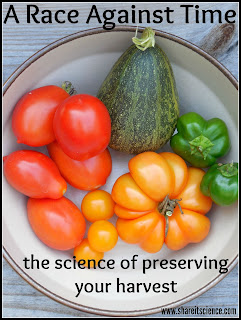
    September 18th, 2015: A Race Against Time- The Science of Preserving Your Harvest

    http://www.shareitscience.com/2015/09/glimpse-of-garden-week-24-lessons-from.html 
     http://www.shareitscience.com/2015/09/glimpse-of-garden-week-25-race-against.html

    What will you plant next year? Gardening with kids? Do you have a school garden? Share your ideas! Comment below or connect with us on Facebook or Google+

    (affiliate link)
    Homegrown Collective