Share it! Science : trees
Showing posts with label trees. Show all posts

10 Must-Have Printable Downloads for Fall Science Class

Looking for just the right print out to go along with your hands-on science lesson? Or maybe spruce up an old lesson or unit with something new? Here are 10 fun printable downloads you will find useful year after year during the fall term. We have seasonal and nature topics for early childhood and elementary school aged students covered with: Apples, Pumpkins, Trees and Leaves, Hibernation and Migration. Find some inspiration and discover something new for the new school year! 


This post contains affiliate links, meaning I receive a commission from purchases made through these links, at no additional cost to you. Please see disclosures for more information.


Apple Lesson Printables

Fall is the perfect time to study life cycles, especially those that result in some delicious treats, like the life cycle of an apple tree!  Check out this apple tree life cycle wheel for young learners who are discovering the steps in an apple tree's life cycle. 
 
After you take a trip to the orchard for apple picking, try this apple experiment and download the free printable science journal that goes along with it. Linked to a book in one of our favorite series, Zoey and Sassafras, it explores decomposition and food preservation using apples. It's a great student-led experiment because they have some freedom in what to use to try to preserve their apple slices. 


Pumpkin Lesson Printables 

Pumpkins are yet another super fun way to study plant life cycles. Here is a lovely pumpkin life cycle wheel that actually looks like a pumpkin when you are finished! 

Pumpkins are an easy tool for teaching about decomposition. One of my favorite ways is to use the picture book Pumpkin Jack by Will Hubbell. 

You can read about how I would integrate this story into a long-term lesson in observing the decomposition of a pumpkin here. Included in this post is a link to a free pumpkin observation printable. Or use this decomposing pumpkin study printable to not only set up a science experiment with your own pumpkin, but also integrate pumpkin learning through language arts. 
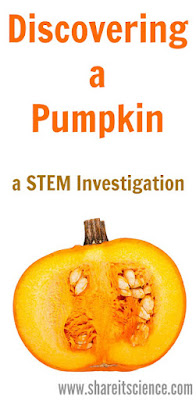
Pumpkin STEM lesson
My all time favorite elementary pumpkin lesson is a multi-day STEM observation of a pumpkin. Weighing, measuring, counting, floating (!?!) tons of science and math skills are used to learn more about a pumpkin. It's always a hit with the kids, especially if they have grown or picked out the pumpkins themselves. You can learn more about this pumpkin STEM lesson here, or find the instructions and observation worksheets in my Teachers Pay Teachers store here


Tree and Leaf Printables

If you live in an area with deciduous trees, then fall is probably one of your favorite seasons for its rainbow of foliage colors. It is a fun time to learn why the leaves change color and study the diversity of trees and their life cycles. 
 
Teach your kids or students tree identification with these simple fall leaf identification cards. They would also be great to take on a nature walk for a leaf scavenger hunt!

You will also want to check out this massive collection of tree printables from WildEarthLab, who creates some beautiful and useful environmental educational and science materials.

Migration Printables

Migration is one of the amazing and miraculous natural occurrences of fall. There are lots of opportunities to observe migration in nature, and also follow migration digitally

If you live in the northeastern United States there are many excellent locations for hawk watching as they migrate south for the winter. Download this free guide for non-commercial use to help you identify the hawks you are seeing in the sky. 

Monarch butterflies are migrators loved by many. Check out these ideas for studying Monarch migration in Preschool-12th grade. This is such a cool 3-D paper model download for learning about Monarch life cycles.


Hibernation Printables

What are animals doing in fall? Preparing for winter. Along with migration, hibernation is an interesting topic to delve into during the later fall months. 

The illustrations are gorgeous in this Charlotte Mason hibernation lesson pack. It would be great to print and laminate for a think-pair-share (or in this case, "read-pair-share") activity in your science classroom.

Introduce what it means to hibernate and begin to discover the creatures that do so with this free hibernation printable pack. 

Don't Miss These Printables!

If you are looking for other quality sources of printable nature or environmental science downloads, I would highly recommend these:

Tanglewood Hollow Digital and Printable Items

Mother Natured Nature Printables Club


Science Experiment: The Hidden Colors in a Leaf

The other day I was out in my yard and noticed something brilliantly red in contrast to the green grass. I couldn't believe it, a tree was already beginning to change color and drop its leaves! I love fall, but I don't know if I am quite ready to leave summer behind. Although it did get me thinking about the colors in leaves and how this was a great opportunity for science!

Here is a great experiment for any time of year that illustrates why leaves change color in the fall in colder climates. Try this experiment as a demonstration for young students, or  as a hands-on project for elementary or middle school.

Leaf Pigment Science Experiment

This post contains affiliate links, meaning I receive a small commission from purchases made through these links. Please see disclosures for more information. As well as links from Amazon.com you will find links to Bookshop.org, an online book store that works to support local independent book stores. Shopping through Bookshop links not only supports this website, but can help you support book stores in your area! 

Why Do Leaves Change Color in the Fall? 

 
Why do some tree's leaves turn different colors in the fall? This beautiful act of nature has to do with the pigments in leaves. You are probably already familiar with one of the pigments- chlorophyll. Chlorophyll is the pigment that makes plants green. It is very important in photosynthesis, the process by which plants make their own food, as it allows plants to absorb the energy in light.

Although green is the color we associate with most plant leaves, there are other pigments in plants. Carotenoids are orange and yellow pigments that are in leaves all year round. During the growing season these pigments are masked by the green chlorophyll. As the tree begins to "shut itself down" or go dormant for the winter, it is not making chlorophyll any longer and the other colors begin to shine through.

Leaf Pigment Science Experiment

Anthocyanins are pigments that are not present all year in the leaf, but are produced there as the summer comes to an end. These pigments are responsible for the reds and purples we see in fall foliage.

How can we find out what colors are in a leaf? Chromatography! Chromatography is the process of separating mixtures, in this case colored pigments. Here is a kid-friendly version of leaf chromatography appropriate for home or school. 


Leaf Science Experiment Supplies


Hidden Colors in a Leaf Pigment Science Experiment

You will need:

Leaf Chromatography Experiment


Collect a variety of leaves. I chose different colors just to see what would happen. My hypothesis was that I would see the most variation of pigments in the green tree leaves, like the maple and beech.
Hidden Colors in a Leaf Pigment Science Experiment

Grind up the leaves. This is the fun part! You can crunch, tear and grind them up with your fingers, or grind them with a little bit of water in a mortar and pestle. Kids love using the mortar and pestle and you can get them fairly inexpensively.

Hidden Colors in a Leaf Pigment Science Experiment


Put the leaves (and any liquid if you've used the mortar and pestle) into your beaker or glass. Add about 2 Tablespoons water and 2 teaspoons isopropyl alcohol in the glass. (Alternative examples of this experiment omit the water and call for heating the alcohol and then covering the glasses with plastic wrap to prevent evaporation. I have done it without heat and plastic wrap many times and it seems to work fine!)
Hidden Colors in a Leaf Pigment Science ExperimentHidden Colors in a Leaf Pigment Science Experiment
Cut the coffee filters into strips. The middle of the filter works the best as it is the widest, but any strip will work. Roll one end of the strip around a pencil. Adjust the height so that when you place it in the liquid it is just barely touching. Secure it with a small piece of tape.
Hidden Colors in a Leaf Pigment Science Experiment

Hidden Colors in a Leaf Pigment Science Experiment
Put your strip in the leaf mixture and let it sit overnight. The next day pull the strips out and let them dry. Then observe! What do you notice? Look carefully, there will be tiny stripes of different colors. The most water soluble pigments will travel the furthest. What pigments do you see in each leaf? Are you surprised by the results? Why?
Hidden Colors in a Leaf Pigment Science Experiment
Some really pretty pigments in the Japanese Maple Leaf (L), and mostly browns in the red Maple leaves (R).

Hidden Colors in a Leaf Pigment Science Experiment
Notice the thin line of green pigment (Chlorophyll!) on the bottom of the Beech leaf (L) and the Grass (R).
I am excited to compare these end of summer results with the same leaf types in the spring! Do you predict there will be a difference?

For the entire experiment lesson plan including student sheets, click here

Have fun experimenting! I'd love to hear about your results!

If you are interested in plant STEM, you'll also like to try this seed engineering design challenge.  Also check out this collection of autumn science activities.


Tons of great plant science activities on my Pinterest Board!


Hidden Colors in a Leaf Pigment Science Experiment


It's Raining Acorns!

    
     It seems like this year is a good one for the oaks. The past few days I have literally heard acorns raining down in the forest around my yard, and they are littering walkways and sidewalks everywhere. I am sure many in my neck of the woods remember the exceptionally big "mast" year for acorns- 2010. That year it was a painful proposition to take a walk under an oak tree, they rained down for days. Mast is the word used for the reproductive part of woody plants, in other words, the seeds of trees and shrubs. There are soft masts and hard masts. Soft masts include tree buds, catkins and berries, whereas hard masts-you guessed it- are harder "fruits" such as acorns, hickory nuts and beech nuts. In some seasons there are more hard masts, like acorns, produced than others. It is a phenomena that scientists have difficulty predicting with great certainty, although there can be some predictable factors such as weather. Like all things in nature there are so many causes and interconnections that predicting a good mast crop year is a little tricky. These abundant years could happen two years in a row, or may have two to five years in-between. Weather may be a factor, however, since most acorns or nuts are on a two-year growth cycle, the weather that is advantageous for producing a larger quantity of seeds may occur in the year before we notice the seed production.
     As you can imagine, more acorns means good eating for herbivores such as chipmunks, squirrels, turkey and deer. Squirrels not only have a lot to eat, but they also help the tree to disperse its seeds. Gray squirrels bury their acorns in a variety of different places and then only recover some. These forgotten seeds often grow into saplings. In essence they are planting the seeds for the oaks.
Gray squirrels are smarter than you might think when it comes to acorns. Scientists have found that the squirrels can differentiate the acorns from white oaks and the acorns from red oaks. The white oak seeds germinate very quickly, and therefore lose their nutritional value hastily. The squirrels eat these first, rather than store them for later. They prefer to store the red oak acorns to eat over the winter and spring. Even more incredibly, sometimes the squirrels will bite through the embryo of the white oak acorns, prohibiting them from sprouting. This makes the white oak acorns just as valuable to store as the red. The wonders of nature never cease to amaze- if only they could evolve the behavior to look both ways before crossing the road!
     Obviously, there are pros and cons for many natural phenomena, depending on your species and perspective. Scientists have linked larger Lyme disease carrying tick populations to years with small acorn crops. A good mast year in the northeast can lead to a boom in the population of white-footed mice, whereas a meager crop causes a big drop in the mouse population. White-footed mice are the preferred host for the black-footed tick which is very good at carrying and transmitting Lyme disease. When the population drops, the ticks are forced to find other hosts- including us. This was very clear after the huge mast crop in 2010. The mouse population sky-rocketed, then the following year the acorn crop was practically non-existent. The subsequent mouse population crash caused the potential for an influx of Lyme disease that year. Many believe that the tick population has only to do with the weather, but again, there are many factors at work in the complex natural world.
     Regardless of the larger food web implications of raining acorns, it's probably best to duck and cover this fall if you venture out under the oak trees- they come down pretty fast!

Read more:


Tree Activities and Resources

Mast Tree Network

Arbor Day Tree ID online field guide

Arbor Day Tree ID lesson plan (grades 4-12)

Project BudBurst- Citizen Science Project

Acorn Craft Ideas

Acorn Science Story for kids- Highlights magazine