This week marks the 3rd Hour of Code international event. The Hour of Code is a grassroots effort to get people involved in computer coding and computer science. This event runs in early December in conjunction with Computer Science Education Week. Although there is a focus on getting everyone involved in coding during this week, learning to code is certainly not limited by dates. There are tons of activities and resources to teach kids to code throughout the year.
This post contains affiliate links. Please see disclosures for more information.

What is wonderful about learning to
code is that anyone can do it. You don't even need to be sitting at a
computer! The basics of computer coding rely on patterning and
sequencing. These are excellent critical thinking skills that are the
backbone of many disciplines including science. Learning to code
allows us to take a science and technology skill and create something
new.
Although I advocate for children
spending time outside and playing with things that do not have
screens, I believe that learning the basics of coding at a young age
puts students in a better position to learn computer science and
other sciences as they grow up. The reality of our world is that it
is digitally driven, and I'd rather kids understand how their devices
work and not simply using them blindly!
I looked at some of the different
resources for coding in my post "Children's STEAM Festival: Exploring Kid's Opportunities in Technology (Coding, Making, Robotics and More!)" If you are looking for some ideas of how to get involved in computer
coding with kids, this would be a great place to start.
Let's look at some other resources for coding that involve devices and others that do not!
You are never too young or too old to
develop coding skills! An excellent article on supporting classroom
learning with computer science, particularly in Kindergarten with
early readers is "Coding for Kindergarten" from Edutopia.
The author, Sam Patterson, a K-5 technology integration specialist
very clearly lays out the skills that students learn when they begin
to code. Things like counting, cause and effect, planning and
problem-solving. Patterson also outlines how programming promotes
social learning. "Coding Class, Then Naptime: Computer Science for the Kindergarten Set" is another great read illustrating how learning to code at a young
age (with non-screen options) can set the foundation for learning in
many areas.
Examples of coding without screens:
- Checkers Math Pre-Coding without an App from Sugar Aunts blog.
- "Can Learning to Knit Help Learning to Code?" Teach coding through knitting!!
- Coding for Kids (Without a Computer) from Science Sparks
- Robot Turtles - a board game that secretly teaches coding to kids 4 and up.


Learning to Code with Technology
- Dot and Dash are robots that teach kids how to code and program.
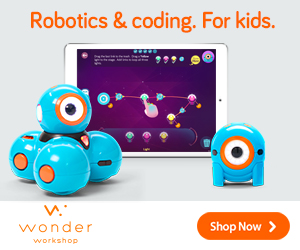
- Bee Bot is another robot geared towards very young children. This is a great tool to tie into other lessons in the classroom as it helps with sequencing and problem solving.


There are tons of free and inexpensive
apps and websites to teach coding.
- Check out Code Studio for activities on the screen and some that get kids moving to learn to code.
- Tynker is a free online coding course for kids age 5 and up.
- Daisy the Dinosaur is a free app that allows kids to learn the basics to programming their own computer game.
- Hopscotch teaches kids coding through game development as well. This is another free app that is directly linked to Hour of Code activities.
Looking to teach coding to middle or
high school? Check out curriculum resources at Code.org or CodeHS.
Some coding books to discover-